A Congressman Questioned Reports of Deadly Conditions at an ICE Detention Center. Then Two More People Died.
Editor’s Note: Amol Sinha is a civil rights attorney and the executive director at the ACLU of New Jersey where he oversees litigation and advocacy to advance the rights of all New Jerseyans. This post was originally published by USA Today Network New Jersey.
Immigration detention is cruel and inhumane. It’s also deadly.
Conditions in detention facilities are so egregious that the death rate of people in Immigration and Customs Enforcement (ICE) custody has more than doubled since the start of President Trump’s second term, reaching its highest level in over a decade. But despite overwhelming evidence, certain members of Congress have refused to acknowledge what is happening in front of our eyes and to our neighbors.
"Immigration detention is cruel and inhumane. It’s also deadly."
At a in July, House Judiciary Subcommittee on Oversight Chairman Jeff Van Drew, along with witnesses he invited, argued that accounts of medical neglect, inedible food, unsanitary conditions, and abuse at the immigration detention facility were exaggerated or fabricated. He even praised the care available at the facility and questioned the legitimacy of a weeks-long hunger strike by detained people protesting their treatment. "They get 24-hour emergency care whenever and wherever it’s needed," he said.
When it was my turn to testify, I set the record straight. I described what we have documented for months: people denied life-sustaining medication, individuals forced to go without their wheelchair, detainees losing dramatic amounts of weight, and repeated reports of serious medical conditions being ignored. I also spoke the name of Jean Wilson Brutus, a 41-year-old Haitian man who died one day after arriving at Delaney Hall last December.
"Nearly 60 people have died in detention, as calls against medical neglect, inedible food, and unsanitary conditions continue. Congress must establish standards of care and accountability."
I warned that if immediate action was not taken, this would happen again and again. I am devastated that I was right. Two weeks after the hearing, two more people detained at Delaney Hall died, reportedly from inadequate medical care.
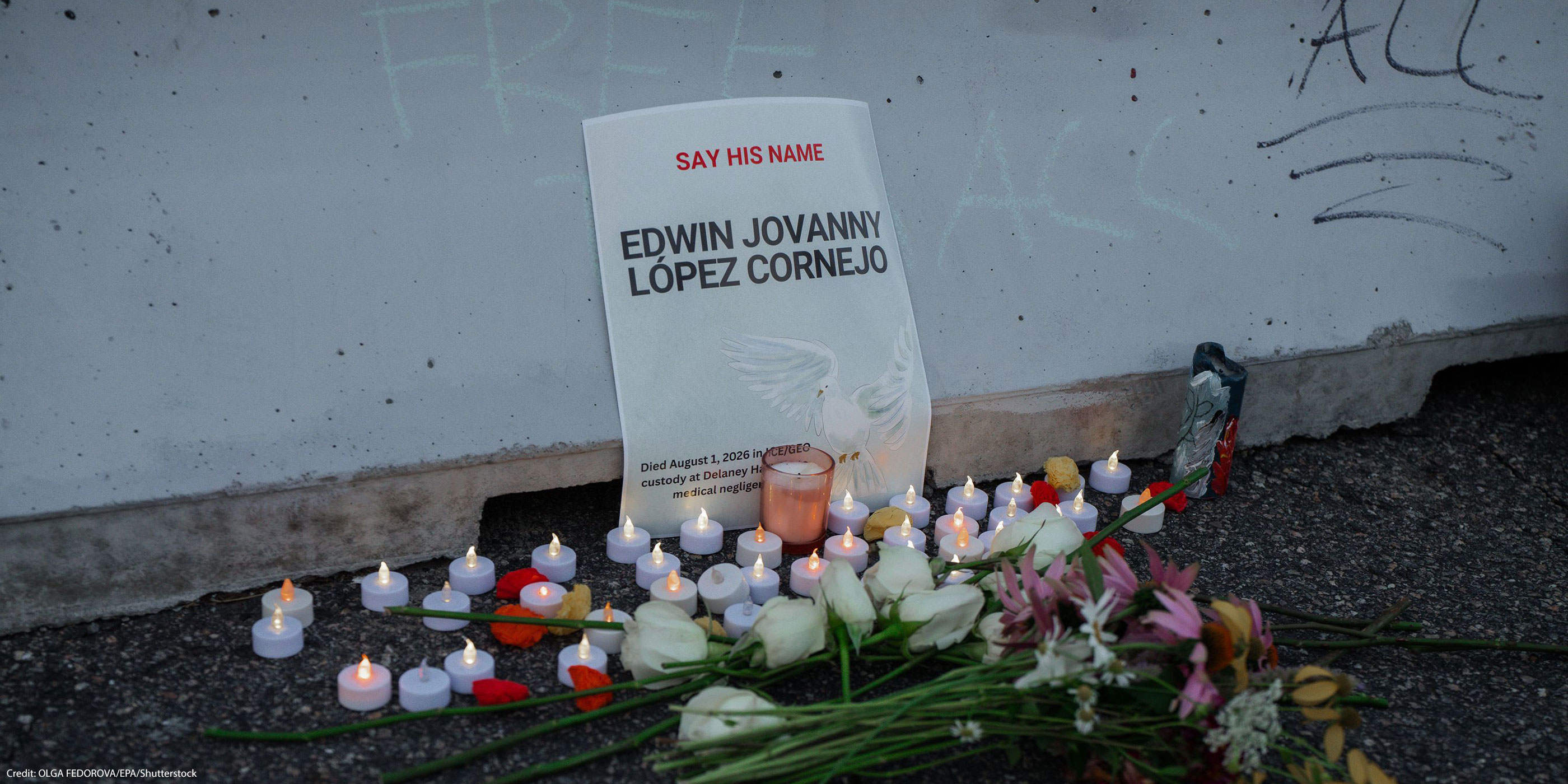
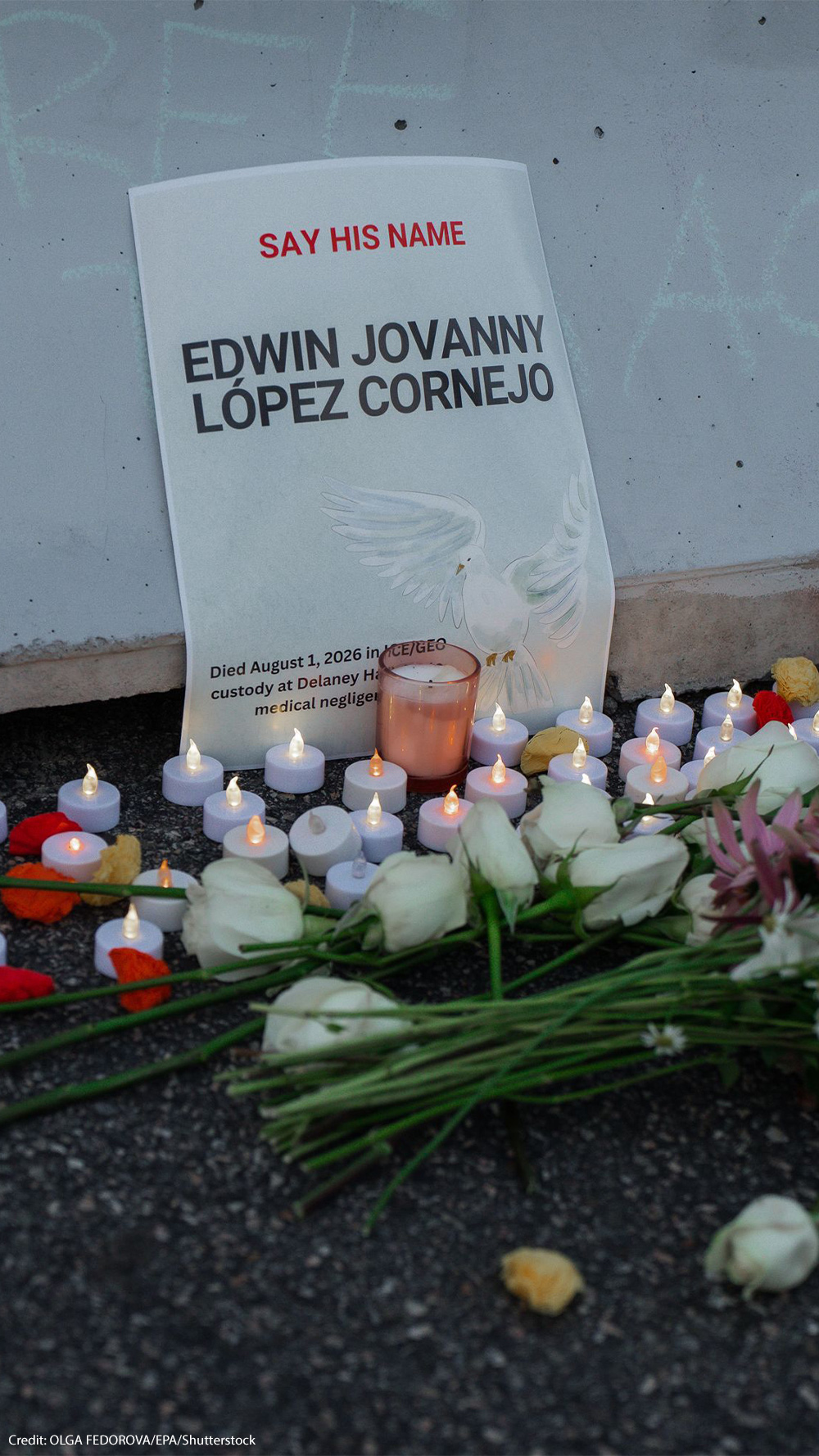
, a 39-year-old man who had lived in Plainfield, New Jersey for more than two decades, died after suffering a medical emergency. He was a construction worker, a father to a 12-year-old U.S. citizen daughter, and a beloved member of his community.
According to his family, Mr. Lopez Cornejo had managed diabetes, high blood pressure, and epilepsy with medication for years. His relatives now question whether he consistently received this medicine during the six weeks he spent at Delaney Hall. His brother recalled that even obtaining Tylenol required submitting paperwork and waiting several days.
Rep. Rob Menendez reported that when Lopez Cornejo suffered his medical emergency, he was seen by nurse practitioners because the facility’s lone physician was neither present nor on call. An ambulance eventually transported him to University Hospital, where he was pronounced dead on August 1st.
We now know that around the same time as the July hearing, , another man detained at Delaney Hall, experienced a seizure and was transported to the hospital. ICE granted him a . Because he technically was no longer in a detention center, his death was not counted as death in ICE custody.
Congress must confront the truth of these stories. They deserve to be told. That’s why I sent a to Rep. Van Drew and the subcommittee to enter the stories of Lopez Cornejo and Chajon-Raxon into the official congressional record.
But the cases from Delaney Hall are not outliers. In July, 45-year-old died while in ICE custody in Georgia. His family says officers prevented him from bringing most of the medications he needed. Days later, 29-year-old died from acute leukemia after his family said detention officials delayed urgent medical treatment while he repeatedly complained of severe symptoms.
Taken together, these deaths — — expose a system in which medical care is inaccessible, opacity is the standard, and ICE evades any accountability.
That is why congressional oversight matters. When people repeatedly report ignored calls for medical help, stalled emergency care, withheld medication, rancid food, and deplorable conditions, the allegations deserve investigation. Instead of asking whether the abuse is real, Congress should be asking why these reports have remained so consistent across facilities.
The human cost of these failures extends far beyond the detention center walls.
“I don’t have a way of healing this deep pain,” Lopez Cornejo’s mother said after losing her son.
His 12-year-old daughter put it even more simply: "I’m going to grow up without a father."
No congressional hearing can change what happened to their family. But Congress can choose whether those deaths become another statistic or the catalyst for meaningful reform, so it doesn’t happen to another family.
Members of Congress should conduct bipartisan, unannounced, and uncensored inspections of Delaney Hall and other ICE detention facilities, as they are authorized to do. They should speak directly with detained people and those recently released. They should compel testimony from ICE officials and private prison executives responsible for operating these facilities. They should advance legislation, including the , that phase out for-profit detention facilities like Delaney Hall.
There is indeed a “false narrative” about Delaney Hall — that it is humane. The tragic evidence shows that this facility is dangerously mismanaged and that the ICE coverup must end.
Related Issues
Related Content
-
News & CommentaryOct 2026

Immigrants' Rights
We Launched The First Comprehensive Civil Rights Review Of Mass Deportations. Here’s How It’s Impacting Democracy.. Explore News & Commentary.We Launched the First Comprehensive Civil Rights Review of Mass Deportations. Here’s How It’s Impacting Democracy.
ACLU breaks down findings from our latest report on how mass deportations are breaking our democracy. -
News & CommentaryOct 2026

Civil Liberties
+4 Issues
This Supreme Court Term: Our Rights And Freedoms At Stake. Explore News & Commentary.This Supreme Court Term: Our Rights and Freedoms at Stake
The ACLU could have its busiest Supreme Court term ever, with potential cases on immigration, voting rights, and religious freedom in schools. -
Press ReleaseOct 2026

Immigrants' Rights
+3 Issues
New Aclu Report Sounds The Alarm On How Trump Administration’s Mass Deportation Agenda Is Eroding Democracy. Explore Press Release.New ACLU Report Sounds the Alarm on How Trump Administration’s Mass Deportation Agenda is Eroding Democracy
WASHINGTON — The American Civil Liberties Union today released a new report, 76 Ways Mass Deportation is Breaking Our Democracy, detailing how the Trump administration is using mass deportation as the pretext and mechanism to attack civil liberties and structural democratic safeguards at an unparalleled scale and speed. The report comes as Immigration and Customs Enforcement (ICE) arrests have hit a record high, as the Trump administration has shifted its approach from mass raids to more discrete arrests following widespread outrage. From the deployment of federal agents and military troops for immigration enforcement in U.S. cities, to the mass revocation of visas and other forms of lawful status, and the targeting of immigrants’ rights protesters, the Trump administration has repeatedly used immigration policy as a trojan horse for attacks on core pillars of U.S. democracy. Notably, the report categorizes the dizzying array of abuses into three major categories, which often overlap: Attacks on civil rights and liberties, as the Trump administration has used mass deportations as both a pretext and distraction for its assault on myriad constitutional rights – including the rights to free speech and freedom of assembly and due process – impacting citizens and noncitizens alike. Attacks on democratic checks and balances, as the administration expands its federal deportation police and executive power, eviscerating due process for immigrants and normalizing ICE’s violence, while evading and even defying court orders. Attacks on multiracial, pluralistic democracy, as the administration continues to gut existing legal protections and introduce new policies targeting people who are immigrants – including through visa and entry bans and efforts to end birthright citizenship and Temporary Protected Status (TPS) – in what appears to be a calculated attempt to change the racial makeup of the U.S. now and into the future. “For the past year and a half, the ACLU and advocates have warned that the Trump administration’s mass deportation agenda pulls straight from an authoritarian playbook – and now, we’re seeing the devasting impacts of those policies, with citizens and noncitizens alike paying the price and the state of our democracy in crisis,” said Naureen Shah, director of immigration policy and government affairs at the ACLU. “This report is a clarion call to members of Congress to strengthen and repair our pluralistic, multiracial democracy by passing meaningful immigration reforms. That must include creating a broad path to citizenship for immigrants who contribute to our communities and our economy.” Within the report, the ACLU also calls on members of Congress to restore and defend democratic rights and norms through transformative immigration reform, including by creating a broad path to citizenship and modernization of border processing and policies. It also calls on lawmakers to build stronger accountability, transparency and oversight measures to effectively compel the executive branch to uphold civil rights and civil liberties. “From the cancellation of Congressionally mandated protections like TPS to the arrest of noncitizen students for exercising their First Amendment rights, the Trump administration has repeatedly violated bedrock democratic principles under the guise of immigration enforcement,” said Sarah Mehta, deputy director of immigration policy and government affairs at the ACLU. “As this administration has shown, no one is safe from its extreme mass deportation agenda. Our elected officials – and the state of our democracy – cannot afford to allow this lawlessness to continue. The time to act is now.” This report is the fourth in the ACLU’s affirmative immigration vision series, in which policy and legal experts explore how the Trump administration’s immigration agenda has harmed communities nationwide, undermined our democracy, and wreaked havoc on key industries and weakened the American workforce. The series will also outline steps that members of Congress, as well as state and local policymakers, can take to reform the U.S. immigration system and inoculate against future attacks on core rights and safety. You can read the full report here: /publications/76-ways-mass-deportation-is-breaking-our-democracy -
News & CommentaryOct 2026

Immigrants' Rights
Trump’s Deportation Agenda Is Making The Affordability Crisis Worse. Explore News & Commentary.Trump’s Deportation Agenda Is Making the Affordability Crisis Worse
A new report from the ACLU and AFL-CIO outlines how mass deportations are damaging the economy. A broader path to citizenship would create jobs and raise wages.