
The Decade-Long Fight for Pregnant Workers
July 20, 2023
On Tuesday, June 27, more than a decade after its first introduction in a congressional committee, the Pregnant Workers Fairness Act went into effect, changing the landscape of work for all pregnant people. Before this law, many pregnant workers had to decide between protecting their jobs and protecting their health.
While there have been efforts in the past to protect pregnant workers, employers have always found loopholes to avoid providing accommodations. Against their judgment and against their doctors’ judgment, pregnant workers have had to lift heavy objects, stand for hours on end, and expose themselves to hazardous chemicals. This will no longer be the case thanks to national advocacy efforts, including those from us here at the ACLU.
Today, we’re speaking with Vania Leveille, senior legislative counsel in the ACLU’s National Political Advocacy Department, who will share more about the mammoth undertaking that moved the law to its passage, and Gillian Thomas, senior staff attorney for the ACLU’s Women’s Rights Project, who will detail what the act looks like in practice.
In this episode
Kendall Ciesemier


Listen to this episode on
This Episode Covers the Following Issues
Related Content
-
Press ReleaseAug 2026

Disability Rights
Challenge To West Virginia Methadone Clinic Moratorium Proceeds. Explore Press Release.Challenge to West Virginia Methadone Clinic Moratorium Proceeds
CHARLESTON, W.Va. – A federal judge in West Virginia today declined the state’s request to dismiss a lawsuit brought by West Virginia’s largest overdose prevention group, Solutions Oriented Addiction Response of West Virginia, which is suing to overturn the state’s nearly two-decades-old moratorium on new methadone clinics. The ruling allows the case to proceed. “As we are packing thousands of doses of naloxone and care packages for Save a Life Day 2026, we are reminded that access matters,” said Sarah Stone, co-director of Solutions Oriented Addiction Response of West Virginia (SOAR-WV). “Whether it’s naloxone, methadone or any other evidence-based care, people shouldn’t have to overcome stigma and unnecessary barriers to get the care they need. Dignity, autonomy and equitable access should not be extras. They are a baseline.” Access to methadone is critical for people living with opioid use disorder, allowing people who use drugs like fentanyl to begin recovery treatment without dangerous withdrawal. Over the last two decades, more than 12,000 people have died from an opioid overdose in West Virginia. Yet, a statewide moratorium and state zoning restrictions limit methadone clinics to just nine clinics across the state, leaving large parts of the population a very long distance from the nearest clinic. “[A]s SOAR-WV has alleged the lack of methadone treatment centers has made it more difficult and time consuming to connect individual users to treatment, it necessarily follows that it is spending more of its resources on each individual referral. Therefore, the Court has little difficulty finding that SOAR-WV has sufficiently alleged a direct connection between the moratorium and zoning restrictions and injury to its mission,” wrote U.S. District Judge Robert C. Chambers in his order today. The lawsuit is being brought by the American Civil Liberties Union, ACLU of West Virginia, and Kaplan & Grady. It argues that the moratorium violates the American with Disabilities Act and Section 504 of the Rehabilitation Act, because people with opioid use disorder – a recognized disability under federal law – are unable to receive the essential rehabilitation services they need. “West Virginia’s moratorium is denying people with opioid use disorder the ability to receive lifesaving healthcare. This isn’t just dangerous and inhumane, it’s discriminatory and illegal,” said Joseph Longley, staff attorney with the ACLU Disability Rights Program. “We look forward to proving that in court.” “This ruling is a critical step toward ending West Virginia’s discriminatory barriers to addiction treatment,” said David Howard Sinkman of Kaplan & Grady. “Methadone is essential for treating opioid use disorder and particularly important in the fentanyl era. People need access to treatment, not government restrictions that put their lives at risk.” The order denying the motion to dismiss is available here: /cases/solutions-oriented-addiction-response-west-virginia-v-state-of-west-virginia?document=Order-Denying-Motion-to-Dismiss -
Press ReleaseAug 2026
Disability Rights
Disability Rights Organizations Urge Federal Appeals Court To Reject Exclusion Of Blind Woman From Jury Service. Explore Press Release.Disability Rights Organizations Urge Federal Appeals Court to Reject Exclusion of Blind Woman from Jury Service
NEW YORK – Disability rights organizations today filed an amicus brief in the Second Circuit Court of Appeals seeking to reverse a lower court decision to dismiss a case brought by a blind woman who was excluded from jury service because of her disability. The case involves a blind woman, Emeline Lakrout, who sued the New York State Unified Court System after she was excluded from jury service because the court denied her accommodations for her disability. Her claims were dismissed by a federal district court, and Ms. Lakrout has filed an appeal in the Second Circuit to vindicate her rights. “The importance of jury service as a fundamental civic duty cannot be understated. When disabled people are excluded from this core form of civic participation, it undermines the fairness of the judicial system and denies individuals with disabilities representation in the process,” said Malhar Shah, senior staff attorney with the ACLU Disability Rights Program. “This is about more than one juror – New York courts have repeatedly failed to remove systemic barriers that prevent disabled people from serving on juries. Accessibility isn’t optional, and we hope the Second Circuit states that clearly.” The amicus brief argues that excluding Ms. Lakrout from jury service violates the Americans with Disabilities Act and Section 504 of the Rehabilitation Act. “Blind prospective jurors face pervasive institutional barriers to jury service that are not the result of discriminatory individual decisions but are instead the result of the widespread failures of courts to take the required affirmative steps to include and accommodate disabled court users, including identifying and providing the auxiliary aids and services that a person may need. Enforcement of Section 504 and the ADA is thus critical to the ability of blind people to exercise their fundamental duties of citizenship, including jury service,” the brief reads. “It is frankly unacceptable that New York courts are excluding people with disabilities from jury service, calling into question whether our judicial system serves all New Yorkers equally,” said Beth Haroules, director of disability justice litigation at the NYCLU. “No one should be turned away from a fundamental civic duty simply because they have a disability. Our laws require accommodations to dismantle systemic barriers for people with disabilities, and the Second Circuit must uphold this basic right.” Systemic barriers continue to cause widespread exclusion of blind and otherwise disabled jurors, and affirmative steps need to be taken to include jurors with disabilities, according to the brief. This includes securing auxiliary aids and services like screen readers and assistive listening devices used to provide effective communication, developing accommodation policies, and training staff to implement accommodations. Excluding jurors with disabilities, the brief argues, undermines the fairness, representativeness, and legitimacy of the judicial system. The brief in Lakrout v. New York Unified Court System was submitted by the American Civil Liberties Union, New York Civil Liberties Union, Disability Rights Education and Defense Fund, Disability Rights New York, and the National Disability Rights Network. The brief is available here: /cases/lakrout-v-new-york-state-unified-court-system?document=Amicus-Brief -
New YorkAug 2026

Disability Rights
Lakrout V. New York State Unified Court System. Explore Case.Lakrout v. New York State Unified Court System
-
News & CommentaryJul 2026
Disability Rights
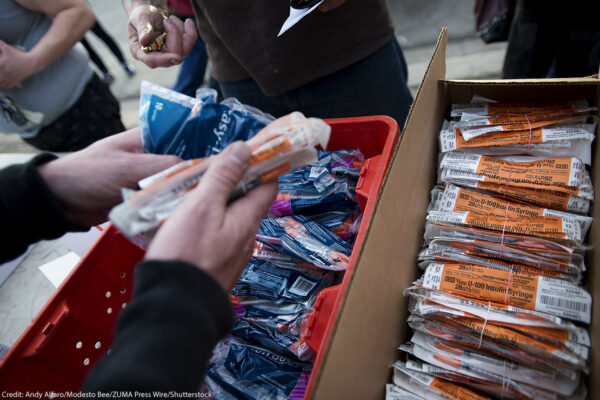
Bans On Lifesaving Program For People Who Use Illegal Drugs Violate The Americans With Disabilities Act. Explore News & Commentary.Bans on Lifesaving Program for People Who Use Illegal Drugs Violate the Americans with Disabilities Act
Syringe Service Programs provide access to crucial health services to people with substance use disorders. The ACLU is fighting against bans that limit these lifesaving programs.