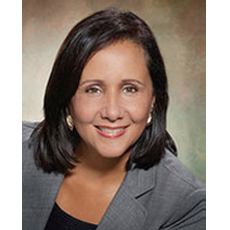
Tomorrow morning Laura Murphy, Director of our Washington Legislative Office, will appear on NBC’s “Today” to discuss the recent controversy surrounding the Obama administration’s announcement that it would keep in place a proposed rule that ensures that new insurance plans include coverage of contraception.
The powerful lobbying arm of the Catholic Church, the United States Conference of Catholic Bishops, has repeatedly made claims to the press and their constituents that the rule violates their religious liberty. During her appearance, Murphy will make it clear that religious liberty is not at risk. What is at stake is the guarantee that everyone is treated fairly and can live their lives free from discrimination.
Tune in at 7 a.m. EST or check your local listings.
Learn more about reproductive freedom: Sign up for breaking news alerts, , and .
Related Issues
Related Content
-
Press ReleaseAug 2026

Religious Liberty
Massachusetts Supreme Judicial Court Upholds Injunction Preventing The Installation Of Religious Statues On Quincy Government Building. Explore Press Release.Massachusetts Supreme Judicial Court Upholds Injunction Preventing the Installation of Religious Statues on Quincy Government Building
BOSTON – In a landmark ruling, the Massachusetts Supreme Judicial Court today unanimously upheld a preliminary injunction blocking the installation of two 10-foot-tall religious statues depicting St. Michael the Archangel and St. Florian outside the entrance of the public safety building in Quincy. The court upheld the trial court’s determination that a group of Quincy residents and taxpayers are likely to succeed in their claim that the statues violate the Massachusetts Constitution’s requirement of government neutrality towards religion. The injunction will remain in place while litigation proceeds in Norfolk Superior Court. In its ruling, the court affirmed that installing the statues as the sole adornment on the municipal building “could be viewed by the public as endorsement of a particular religion, and the subordination of others,” especially because “they stand tall and alone, adorned with Catholic iconography” and are not long-standing historic monuments. The justices affirmed on this record the trial judge’s conclusion that “the statues’ primary effect will be to advance a religious message,” even if they also serve a secular purpose as symbols of courage for first responders. Finally, the justices ruled that the public interest weighs strongly in favor of maintaining the preliminary injunction, because if the statues were to be installed while the litigation continued, “the plaintiffs and other members of the public would have to confront them regularly, experiencing feelings of subordination given their own religious beliefs or nonbeliefs.” “I’m thrilled with this ruling and I'm relieved that these statues will not be installed while we pursue our case against the city,” said Claire Fitzmaurice, a resident of Quincy and a plaintiff. “As a Unitarian Universalist, I cherish the principle of religious pluralism. I believe that Quincy should be a place where we welcome people from all faiths and backgrounds. To have these imposing religious statues looming over the entrance of the public safety building would fly in the face of that pluralistic ideal — especially as our city continues to grow more diverse. I look forward to our next day in court." "The court’s wise decision casts doubt on the profoundly un-American idea that Quincy’s city government can spend hundreds of thousands of dollars on massive religious statuary and then affix it to the front of the public safety building, where it would loom above citizens using the main entrance,” said David Reich, a resident of Quincy and a plaintiff. “Our predicament in Quincy takes me back to grammar school, when I and my Catholic and Jewish classmates—a majority of the student body—were required to recite a Protestant version of the Lord’s Prayer. Like the mandatory prayers in 1950s public schools, affixing these statues to the public safety building would send a stark message to people in less-favored religious groups: You don’t count. I'm grateful that the statues will remain far away from the public safety building while we pursue our lawsuit, so that nobody in 2020s Quincy receives that message from their government." The plaintiffs in Fitzmaurice v. City of Quincy filed their lawsuit in May 2025 after local media revealed Mayor Thomas P. Koch’s plan to install the statues, which had been commissioned in secret nearly a year and a half earlier. The estimated cost to taxpayers is at least $850,000. None of these details had previously been disclosed either to the public or to the full Quincy City Council. Despite significant opposition from constituents—including an online petition with over 1,600 signatures and a statement from 19 local faith leaders—the mayor pressed forward with his plan. In October 2025, the Norfolk Superior Court denied the City’s motion to dismiss the lawsuit and issued a preliminary injunction blocking the planned installation. The plaintiffs are represented by the American Civil Liberties Union of Massachusetts, the ACLU, Americans United for Separation of Church and State, the Freedom From Religion Foundation, and Cloherty & Steinberg LLP. The plaintiffs’ legal counsel issued the following statements: Jessie Rossman, legal director at the ACLU of Massachusetts: “Here in Massachusetts, our state constitution is clear: the government must remain neutral in matters of religion and must not elevate one faith above others. With today's landmark ruling, the Supreme Judicial Court affirms those principles, which are the essential foundation of a pluralistic society where people of all faiths and no faith can flourish. As Quincy residents and taxpayers, our clients believe that installing these plainly religious statues would undermine those ideals. We are proud to represent these courageous plaintiffs, and we look forward to continuing to litigate the merits of this case in Superior Court.” Daniel Mach, director of the ACLU Program on Freedom of Religion and Belief: “This ruling is a powerful reminder that the government has no business playing favorites with faith, including at important city facilities. As the court made clear, religious freedom belongs to all Quincy residents, not just those who align with government officials’ preferred religious beliefs.” Rachel Laser, president and CEO of Americans United: “This is a win for religious freedom and church-state separation. Police and fire services are for all Quincy residents, regardless of their religious belief. By trying to install large religious statues in front of the government building dedicated to public safety, Mayor Koch and the city are violating the constitutional promise of church-state separation and sending a message to all who rely on city services that one faith is favored over all others.” Annie Laurie Gaylor, co-president of Freedom From Religion Foundation: "We are delighted by the ruling, which concludes that a government may not give special preference to religion. The Massachusetts Supreme Judicial Court has wisely upheld the trial court’s preliminary injunction, affirming that sectarian religious statues cannot be imposed on the people of Quincy." Find more information about Fitzmaurice et al. v. City of Quincy here. -
Press ReleaseAug 2026
Religious Liberty
Texas Families Urge U.s. Supreme Court To Take Case On Texas Law Requiring Ten Commandments In Public School Classrooms. Explore Press Release.Texas Families Urge U.S. Supreme Court to Take Case on Texas Law Requiring Ten Commandments in Public School Classrooms
WASHINGTON — More than two dozen Texas families are asking the U.S. Supreme Court to hear their challenge to a state law that requires public schools to post a Protestant version of the Ten Commandments in every classroom. The request, filed today, urges the court to protect students’ and parents’ religious freedom by blocking Texas Senate Bill 10 (S.B. 10), ensuring that families — not politicians — have the right to decide what role religion plays in their lives. The Christian, Jewish, Hindu, Baha'i, Unitarian Universalist, and nonreligious families challenging the Texas law attend 22 school districts across the state and are represented by the American Civil Liberties Union of Texas, the ACLU, Americans United for Separation of Church and State, and the Freedom From Religion Foundation, with Simpson Thacher & Bartlett LLP serving as pro bono counsel. Today’s petition seeks review of lower court rulings in two separate but similar cases: Nathan v. Alamo Heights Independent School District and Cribbs Ringer v. Comal Independent School District. Under S.B. 10, Texas public schools must permanently display a state-mandated version of the Ten Commandments, drawn from the Protestant King James Bible, in a “conspicuous” place in each classroom, from kindergarten through 12th grade. The families challenging S.B. 10 object to the law because the displays will pressure children to conform to the state’s favored religious beliefs and interfere with parents’ right to guide their children’s religious instruction. Today’s Supreme Court filing, a joint petition for a writ of certiorari in both cases, follows an April decision by the en banc U.S. Circuit Court of Appeals for the 5th Circuit allowing the state-selected version of the Ten Commandments to go up in the plaintiffs’ classrooms. By a narrowly decided vote, the 5th Circuit ruled that S.B. 10 does not violate either the Establishment or Free Exercise Clauses of the First Amendment — despite a 1980 Supreme Court case striking down a nearly identical Kentucky law. “As a rabbi and parent, forcing a Christian version of the Ten Commandments on children in every classroom is particularly upsetting,” said plaintiff Rabbi Joshua Fixler (he/him) of Houston. “I am not only worried about my own kids, but I’m deeply concerned about all the children in my congregation. These displays put children in the position of having to defend themselves and their families’ religious beliefs against a government mandate that makes them feel different and separate from their classmates.” “Texas politicians shouldn’t have a seat at the table in deciding how our children receive their religious education. That decision belongs to our family,” said plaintiffs Rebekah (she/her) and Ted Lowe (he/him), an Austin-based interfaith couple who are raising their children in the Christian and Jewish traditions. “This law puts one version of religious beliefs above all others in our public schools and sends a message to our children that what we teach them about religion at home is somehow wrong.” “By requiring displays of religious doctrine in every classroom, the state is interfering with our family’s decisions about how our children engage with religion,” said plaintiff Nichole Manning (she/her), a Dallas-area atheist who is raising her children in a nonreligious tradition that gives them the space and autonomy to develop their own beliefs about religion. “As a parent, I intentionally choose to have my children attend public school because I prefer an educational environment without any religious affiliation. In a diverse public school environment, all students should be treated with equal respect, regardless of their religious beliefs, or lack thereof.” “The U.S. Supreme Court has rejected this kind of government-imposed religion before, and it should do so again,” said Chloe Kempf (she/her), attorney at the ACLU of Texas. “Having these posters in Texas classrooms puts students at risk of bullying, stigmatization, and religious coercion. Our nation’s bedrock principle of separating church and state means that families and faith communities — not politicians — get to decide what role religion plays in children’s lives. Texas students deserve public schools that welcome them for who they are, respect their religious or nonreligious backgrounds, and give them the high-quality education they need to build their futures.” “Fifty years ago, the ACLU won a Supreme Court victory against a nearly identical Kentucky law — and we aim to do it again,” said Cecillia Wang (she/her), national legal director of the ACLU. “In our country, no legislature can force its preferred scripture on public school students and families.” “Families — not politicians or public school officials — get to decide how, if, and when children engage with religion,” said Rachel Laser (she/her), president and CEO of Americans United. “We urge the Supreme Court to make clear that these Ten Commandments mandates violate students’ and families’ religious freedom as promised by the U.S. Constitution. With ever more states attempting to force one version of religion into public school classrooms, our nation must recommit to our foundational promise of church-state separation, the lynchpin of religious liberty.” “This case concerns decisions about personal belief and religious instruction, and whether under our Constitution they remain with families and faith communities or are commandeered by the state,” said Jon Youngwood (he/him), global co-chair of the litigation department at Simpson Thacher & Bartlett LLP. “The First Amendment has long protected the freedom of individuals to determine for themselves how they engage with spirituality and religion. Those protections are especially important in the public-school setting.” “The First Commandment, dictating which god must be worshipped, is the antithesis of our First Amendment,” says Annie Laurie Gaylor (she/her), co-president of the Freedom From Religion Foundation. “It is not the government’s role to daily expose young children to a coercive display of one religion’s set of religious edicts in our public schools. Our public schools exist to educate, not to proselytize.” The Lowe and Fixler families share more about how they will be impacted by these Ten Commandments displays and why they oppose them in newly released, heartfelt videos that can be viewed here; transcripts are available here. -
U.S. Supreme CourtAug 2026

Religious Liberty
Cribbs Ringer V. Comal Independent School District. Explore Case.Cribbs Ringer v. Comal Independent School District
A group of Texas families are challenging a 2025 Texas law, S.B. 10, that requires public schools to conspicuously display a state-selected, Protestant version of the Ten Commandments in every classroom. Nearly 50 years ago, the Supreme Court overturned a similar Kentucky law because it violated the First Amendment. After an appellate court ruled that S.B. 10 does not violate the Constitution, the Baha’i, Christian, Jewish, Hindu, and nonreligious families involved in the lawsuit are asking the Supreme Court to hear their case and to block the law. The First Amendment prohibits states from forcing scripture on public-school students, and it guarantees families — not politicians or the government —the right to guide children’s religious belief and education. -
U.S. Supreme CourtAug 2026
Religious Liberty
Nathan V. Alamo Heights Independent School District. Explore Case.Nathan v. Alamo Heights Independent School District
A group of Texas families are challenging a 2025 Texas law, S.B. 10, that requires public schools to conspicuously display a state-selected, Protestant version of the Ten Commandments in every classroom. Nearly 50 years ago, the Supreme Court overturned a similar Kentucky law because it violated the First Amendment. After an appellate court ruled that S.B. 10 does not violate the Constitution, the Christian, Jewish, Hindu, and nonreligious families involved in the lawsuit are asking the Supreme Court to hear their case and to block the law. The First Amendment prohibits states from forcing scripture on public-school students, and it guarantees families — not politicians or the government — the right to guide children’s religious belief and education.