Rümeysa Öztürk: I Saw the Horrors of ICE Detention Firsthand. It is No Place for a Child.
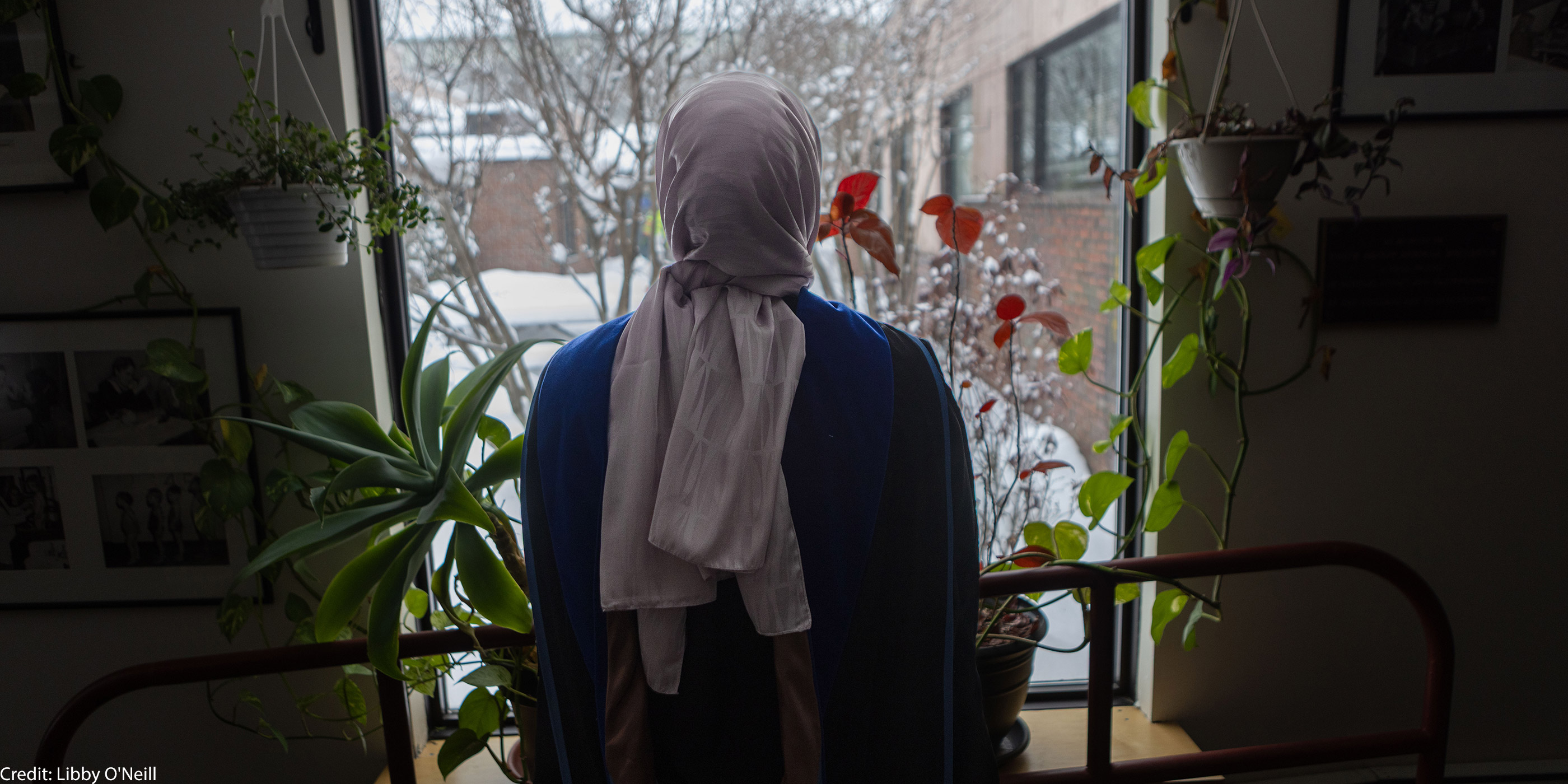

EDITOR’S NOTE: Rümeysa Öztürk was unlawfully detained by ICE agents in Massachusetts in March 2025 for an op-ed she co-authored in the Tufts Daily. She was held in a for-profit detention facility in Louisiana for weeks. She has spent her time after being released working on her dissertation. She now holds a Ph.D. in child study and human development.
Each day, I read more news about children as young as two years old who are detained in a for-profit ICE detention center in Dilley, Texas, away from their friends, schools, and communities. I see from children asking to be released, as they describe the fear they experience day in and day out while in detention. As an applied developmental scientist who spent more than 13 years studying child and youth development, as well as someone who has firsthand experienced the horrors of encountering immigration enforcement and the inhumane treatment and conditions that follow, I am deeply concerned for children impacted by immigration enforcement surges.
There is no shortage of research that demonstrates the connection between family detention and deportation proceedings of children and negative outcomes, , and , , and decline in . Currently, face risk of deportation of a loved one and the lasting negative impacts on their psychological and physical well-being. Immigration and Customs Enforcement (ICE) has detained since mid-January 2025. Of those 3,800 kids, m have been put in custody of the Department of Homeland Security (DHS) and were taken from their parents in many cases.

Free Speech
Rümeysa Öztürk On How We Can All Support Immigrants
Free Speech
Rümeysa Öztürk On How We Can All Support Immigrants
Regardless of my role as researcher, on a human level I am constantly thinking: What do children feel when they first encounter immigration enforcement, who are usually armed and masked? Do their little bodies tremble or freeze? What happens when federal agents take their parents away from them? What does it mean for a preschooler to be detained? What is their crime? Is it being born or, perhaps, seeking asylum? What sense of childhood remains when immigrant children are detained in ?
What I experienced as an adult paints enough of a bleak picture. As a 30-year-old, I was unlawfully abducted from the street by masked and armed agents for being a co-author in that advocated for Palestinian human rights. I was sent to a for-profit ICE prison thousands of miles away from school and the community I’d built in Boston, not to mention thousands of miles away from my family in Turkey. The experience has been to me, even as an adult. Despite the immense care, love, and support from my community, there has still not been a single day when I have felt safe walking the streets again — not even on my way home or to school. It’s not just the moment of abduction that is terrifying, but also where one will go and the inhumane treatment they may face . Research suggests that interacting with the immigration system poses harm to children’s . Previous personal accounts indicate that throughout the lifetime.
As I continue to heal from my own experience in a for-profit ICE prison, I can’t help but wonder if children detained will ever feel safe again. I worry about how they will grow up and carry this adverse experience for a lifetime. Interacting with immigration enforcement not only poses developmental risk to children detained in those shameful places for , but also to children (including ) whose parents are detained at the for-profit ICE prisons. In the for-profit prison where I was unlawfully detained, I met countless who cried everyday longing for their children. I met mothers in the deportation process whose hearts were shattered when their children were taken into foster care. I listened as some mothers tried to speak with their children on tablets, only to have officers order them to close the tablets or take them away, leaving their children in tears. I met mothers whose babies were taken from them just weeks after birth. I met with a pregnant mom waiting for her deportation. Her children are American citizens.
Immigrants' Rights
Immigrants' Rights
Immigrants' Rights
Immigrants' Rights
But these cruel immigration raids aren’t only harming immigrant children or children with immigrant parents. The experience also affects who are waiting for their detained peers to return. These same children are trying to make sense of what they see on news reports of kids being detained, of disappearing classmates, students, and adults on the street during ICE raids. Children and their are being taken from their communities, leaving classrooms and communities in fear. There are accounts of BIPOC and immigrant children at school.
We must all ask ourselves: is this really the world we want for our children — one where they are afraid to go to school, home, hospitals, neighborhoods, playgrounds, museums, and libraries for fear of immigration detention?
I hope there is an end to family detention so that these parents and young children can proceed with their cases while living in their communities, going to school, getting medical treatment, and playing with their friends. Too many children are facing detention because of ICE’s rampant operations. But detention is no place for a child. It’s cruel and unnecessary. We can all take action, whether that means raising our voices to demand an end to child detention, or simply educating ourselves on how current immigration policies are impacting children.
Related Issues
Related Content
-
News & CommentaryOct 2026

Civil Liberties
+4 Issues
This Supreme Court Term: Our Rights And Freedoms At Stake. Explore News & Commentary.This Supreme Court Term: Our Rights and Freedoms at Stake
The ACLU could have its busiest Supreme Court term ever, with potential cases on immigration, voting rights, and religious freedom in schools. -
Press ReleaseOct 2026

Immigrants' Rights
+3 Issues
New Aclu Report Sounds The Alarm On How Trump Administration’s Mass Deportation Agenda Is Eroding Democracy. Explore Press Release.New ACLU Report Sounds the Alarm on How Trump Administration’s Mass Deportation Agenda is Eroding Democracy
WASHINGTON — The American Civil Liberties Union today released a new report, 76 Ways Mass Deportation is Breaking Our Democracy, detailing how the Trump administration is using mass deportation as the pretext and mechanism to attack civil liberties and structural democratic safeguards at an unparalleled scale and speed. The report comes as Immigration and Customs Enforcement (ICE) arrests have hit a record high, as the Trump administration has shifted its approach from mass raids to more discrete arrests following widespread outrage. From the deployment of federal agents and military troops for immigration enforcement in U.S. cities, to the mass revocation of visas and other forms of lawful status, and the targeting of immigrants’ rights protesters, the Trump administration has repeatedly used immigration policy as a trojan horse for attacks on core pillars of U.S. democracy. Notably, the report categorizes the dizzying array of abuses into three major categories, which often overlap: Attacks on civil rights and liberties, as the Trump administration has used mass deportations as both a pretext and distraction for its assault on myriad constitutional rights – including the rights to free speech and freedom of assembly and due process – impacting citizens and noncitizens alike. Attacks on democratic checks and balances, as the administration expands its federal deportation police and executive power, eviscerating due process for immigrants and normalizing ICE’s violence, while evading and even defying court orders. Attacks on multiracial, pluralistic democracy, as the administration continues to gut existing legal protections and introduce new policies targeting people who are immigrants – including through visa and entry bans and efforts to end birthright citizenship and Temporary Protected Status (TPS) – in what appears to be a calculated attempt to change the racial makeup of the U.S. now and into the future. “For the past year and a half, the ACLU and advocates have warned that the Trump administration’s mass deportation agenda pulls straight from an authoritarian playbook – and now, we’re seeing the devasting impacts of those policies, with citizens and noncitizens alike paying the price and the state of our democracy in crisis,” said Naureen Shah, director of immigration policy and government affairs at the ACLU. “This report is a clarion call to members of Congress to strengthen and repair our pluralistic, multiracial democracy by passing meaningful immigration reforms. That must include creating a broad path to citizenship for immigrants who contribute to our communities and our economy.” Within the report, the ACLU also calls on members of Congress to restore and defend democratic rights and norms through transformative immigration reform, including by creating a broad path to citizenship and modernization of border processing and policies. It also calls on lawmakers to build stronger accountability, transparency and oversight measures to effectively compel the executive branch to uphold civil rights and civil liberties. “From the cancellation of Congressionally mandated protections like TPS to the arrest of noncitizen students for exercising their First Amendment rights, the Trump administration has repeatedly violated bedrock democratic principles under the guise of immigration enforcement,” said Sarah Mehta, deputy director of immigration policy and government affairs at the ACLU. “As this administration has shown, no one is safe from its extreme mass deportation agenda. Our elected officials – and the state of our democracy – cannot afford to allow this lawlessness to continue. The time to act is now.” This report is the fourth in the ACLU’s affirmative immigration vision series, in which policy and legal experts explore how the Trump administration’s immigration agenda has harmed communities nationwide, undermined our democracy, and wreaked havoc on key industries and weakened the American workforce. The series will also outline steps that members of Congress, as well as state and local policymakers, can take to reform the U.S. immigration system and inoculate against future attacks on core rights and safety. You can read the full report here: /publications/76-ways-mass-deportation-is-breaking-our-democracy -
News & CommentaryOct 2026
Immigrants' Rights
Trump’s Deportation Agenda Is Making The Affordability Crisis Worse. Explore News & Commentary.Trump’s Deportation Agenda Is Making the Affordability Crisis Worse
A new report from the ACLU and AFL-CIO outlines how mass deportations are damaging the economy. A broader path to citizenship would create jobs and raise wages. -
Press ReleaseOct 2026
Immigrants' Rights
Federal Court Strikes Down Ice’s Courthouse Arrest Policy Nationwide. Explore Press Release.Federal Court Strikes Down ICE’s Courthouse Arrest Policy Nationwide
NEW YORK – In a momentous victory for immigrants’ rights, today the Southern District of New York issued a final, landmark ruling in African Communities Together and The Door v. Todd Lyons striking down one of the Trump administration’s most extreme policies that allowed ICE agents to arrest people for showing up to immigration court. With this ruling, ICE officers cannot conduct civil immigration enforcement actions in or near immigration courthouses, except under limited circumstances, in New York City and across the nation. “Today’s ruling is an enormous win for every noncitizen seeking to safely attend their immigration court proceedings,” said Amy Belsher, director of Immigrants’ Rights Litigation at the New York Civil Liberties Union. “For too long, we watched masked, often armed, ICE officers ambush noncitizens in courthouse hallways, throw immigrants to the ground, and tear sobbing children from their parents. But with today’s order, the court made clear: ICE’s cruel, unjustified policy of conducting mass immigration arrests in courthouses is unlawful and cannot stand.” The court’s order found the government’s mass immigration court arrest policy “arbitrary and capricious” under the Administrative Procedure Act and restores pre-existing policies barring immigration courthouse arrests except in rare circumstances. Originally, the case also challenged a related 2025 Executive Office of Immigration Review (EOIR) policy that urged immigration judges to dismiss noncitizens’ immigration proceedings without proper procedural protections. In this order, the court dismissed that claim as ‘moot,’ because the government had already fully and permanently rescinded it as result of an earlier order in this case. “People should not be arrested for doing exactly what the legal system requires of them,” said Oscar Sarabia Roman, staff attorney with the ACLU’s Immigrants’ Rights Project. "They should be able to come to court, take part in their cases, and leave without fear.” “Immigrant New Yorkers should not have to choose between attending a required immigration hearing and risking detention, or staying away and risking a deportation order for failing to appear,” said Katie Rosenfeld, partner at Emery Celli Brinckerhoff Abady Ward & Maazel LLP. “This ruling restores important safeguards and makes clear that ICE cannot abandon those protections without a reasoned explanation. Due process requires a meaningful opportunity to be heard, and that means people must be able to come to court without fear.” “The court’s ruling is a monumental victory for immigrant families and the rule of law. It brings to an end the cruel and callous practice of arresting immigrants simply for showing up to their court hearings — something that no one should have to worry about, and yet so many were forced to live under that cloud of fear,” said Harold Solis, co-legal director at Make the Road New York. “Today marks a turning point, and our focus now shifts to doing everything in our power to ensure the government fully complies with the court’s decision.” The New York Civil Liberties Union, American Civil Liberties Union, Make the Road NY, and Emery Celli Brinckerhoff Abady Ward & Maazel originally filed this lawsuit on behalf of African Communities Together and The Door on August 1, 2025. Soon after, the groups asked for expedited relief through a stay, which the court partly denied in September 2025. But then, in a shocking revelation in March, the government admitted that a 2025 memorandum — which it had relied on throughout the case to justify its immigration court arrest policy — does not and has never authorized any immigration courthouse arrests. Immediately after, the organizations asked the Court to reconsider its denial, and the court issued a stay. This final federal ruling affirms that order, and expands it to apply nationwide. It is effective immediately. Today’s ruling also builds on the resounding victory from the ACLU of Northern California, in Pablo Sequen v. Albarran, which similarly struck down the Trump administration’s policy of arresting immigrants at courthouses nationwide. Since Trump took office, ICE has mounted an unprecedented campaign of arresting people at their mandated immigration court hearings, and then trying to fast track their deportation. This includes Dylan, a 16-year-old Bronx high school who ICE arrested when attending a routine court date, and Oliver Mata Velazquez, a 19 year old living in Buffalo who ICE targeted, detained, and fast-tracked for deportation.