Privacy & Technology
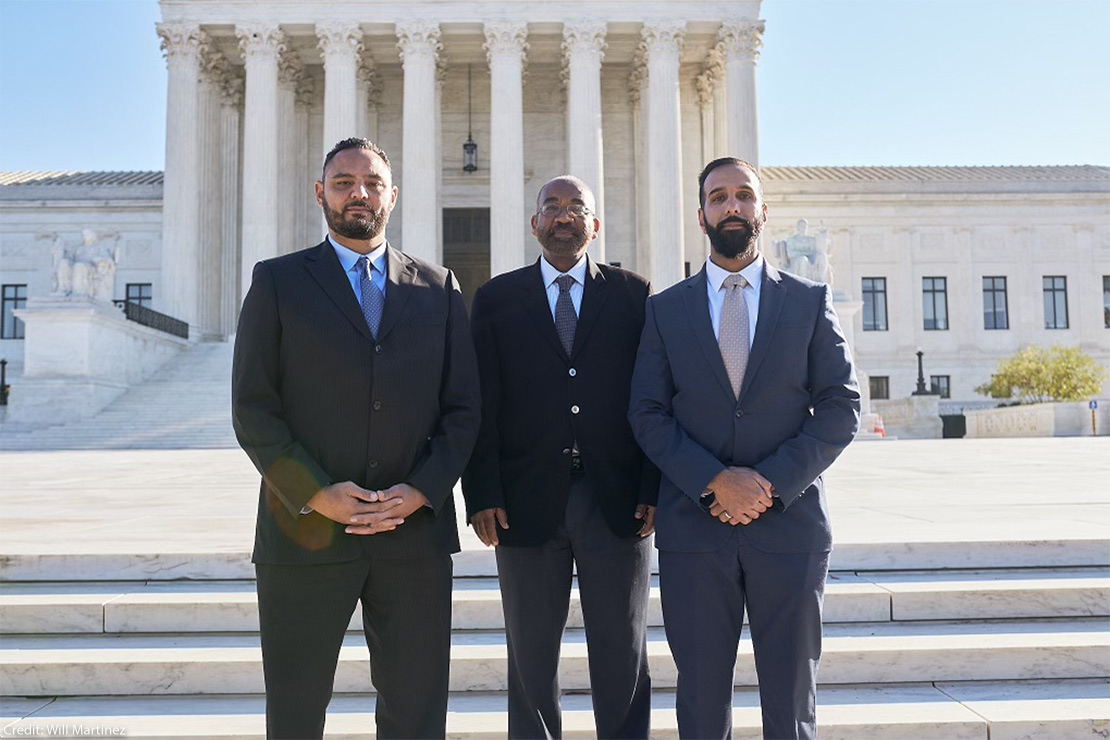
FBI v. Fazaga
In a case scheduled to be argued before the U.S. Supreme Court on November 8, 2021, three Muslim Americans are challenging the FBI’s secret spying on them and their communities based on their religion, in violation of the Constitution and federal law. In what will likely be a landmark case, the plaintiffs — Yassir Fazaga, Ali Uddin Malik, and Yasser Abdelrahim — insist that the FBI cannot escape accountability for violating their religious freedom by invoking “state secrets.” The plaintiffs are represented by the Center for Immigration Law and Policy at UCLA School of Law, the ACLU of Southern California, the American Civil Liberties Union, the Council for American Islamic Relations, and the law firm of Hadsell Stormer Renick & Dai.
Status: Closed (Judgment)
View Case
Learn About Privacy & Technology
Featured
U.S. Supreme Court
Jun 2018

Privacy & Technology
Carpenter v. United States
The Supreme Court ruled that the government needs a warrant to access a person’s cellphone location history. The court found in a 5 to 4 decision that obtaining such information is a search under the Fourth Amendment and that a warrant from a judge based on probable cause is required.
Court Case
Dec 2016

Privacy & Technology
Sarkar v. Doe - PubPeer Subpoena Challenge
The ACLU filed a motion in Michigan state court challenging the constitutionality of a subpoena issued to the website PubPeer demanding that it turn over the identities of anonymous commenters. In March 2015, the trial judge ruled that PubPeer had to unmask one – but only one – of the commenters. Both PubPeer and the researcher appealed, and the ruling was upheld in December 2016.
All Cases
82 Privacy & Technology Cases

U.S. Supreme Court
Dec 2021
Privacy & Technology
Van Buren v. United States
Whether the Computer Fraud and Abuse Act (CFAA) should be interpreted to create liability for violations of computer use policies, including website terms of service.
Explore case
U.S. Supreme Court
Dec 2021
Privacy & Technology
Van Buren v. United States
Whether the Computer Fraud and Abuse Act (CFAA) should be interpreted to create liability for violations of computer use policies, including website terms of service.
U.S. Supreme Court
Dec 2021
Privacy & Technology
Robert Andrews v. State of New Jersey
Whether the Self-Incrimination Clause of the Fifth Amendment protects an individual from being compelled to recall and truthfully disclose a memorized smartphone passcode, where communicating the passcode may lead to the discovery of incriminating evidence to be used against him in a criminal prosecution?
Explore case
U.S. Supreme Court
Dec 2021
Privacy & Technology
Robert Andrews v. State of New Jersey
Whether the Self-Incrimination Clause of the Fifth Amendment protects an individual from being compelled to recall and truthfully disclose a memorized smartphone passcode, where communicating the passcode may lead to the discovery of incriminating evidence to be used against him in a criminal prosecution?
Colorado Supreme Court
Sep 2021
Privacy & Technology
National Security
People v. Tafoya
This case concerns whether the government may surreptitiously record the activities around a person’s home using a remotely operated, pole-mounted video camera for an extended period of time without a warrant. On September 13, 2021, the Colorado Supreme Court held that the Fourth Amendment protects against such surveillance and requires that police obtain a warrant.
Explore case
Colorado Supreme Court
Sep 2021
Privacy & Technology
National Security
People v. Tafoya
This case concerns whether the government may surreptitiously record the activities around a person’s home using a remotely operated, pole-mounted video camera for an extended period of time without a warrant. On September 13, 2021, the Colorado Supreme Court held that the Fourth Amendment protects against such surveillance and requires that police obtain a warrant.
Court Case
Aug 2020
Privacy & Technology
Guan v. Wolf
The American Civil Liberties Union, the ACLU of San Diego, and the New York Civil Liberties Union have filed a lawsuit against U.S. Customs and Border Protection (CBP) and U.S. Immigration and Customs Enforcement (ICE) on behalf of five journalists who were subject to unlawful questioning at the U.S. border. The lawsuit claims that border officers violated the First Amendment.
Explore case
Court Case
Aug 2020
Privacy & Technology
Guan v. Wolf
The American Civil Liberties Union, the ACLU of San Diego, and the New York Civil Liberties Union have filed a lawsuit against U.S. Customs and Border Protection (CBP) and U.S. Immigration and Customs Enforcement (ICE) on behalf of five journalists who were subject to unlawful questioning at the U.S. border. The lawsuit claims that border officers violated the First Amendment.
Maryland
Jun 2020
Privacy & Technology
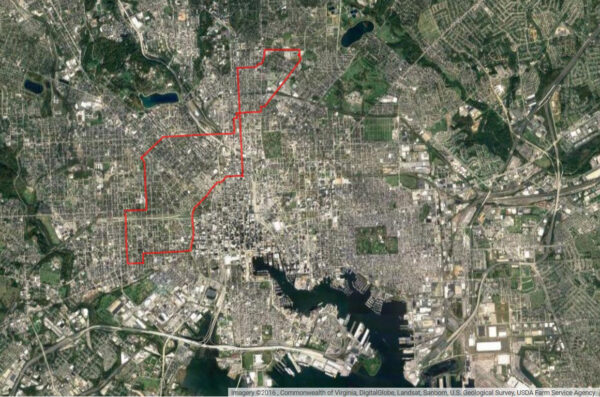
Leaders of a Beautiful Struggle v. Baltimore Police Department
The American Civil Liberties Union (ACLU) and ACLU of Maryland filed a lawsuit against the Baltimore Police Department (BPD) to challenge the constitutionality of deploying a wide-area aerial surveillance program that will put virtually all Baltimore residents under constant, aerial surveillance.
Explore case
Maryland
Jun 2020
Privacy & Technology
Leaders of a Beautiful Struggle v. Baltimore Police Department
The American Civil Liberties Union (ACLU) and ACLU of Maryland filed a lawsuit against the Baltimore Police Department (BPD) to challenge the constitutionality of deploying a wide-area aerial surveillance program that will put virtually all Baltimore residents under constant, aerial surveillance.