Fighting Cuts to Voting Access
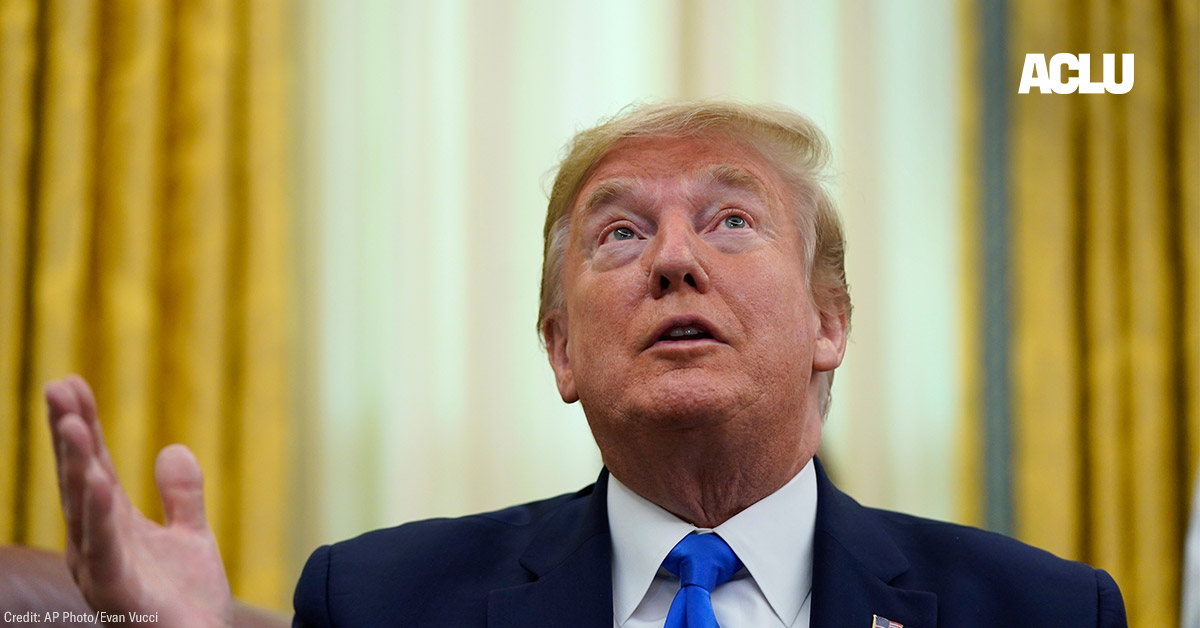
League of Women Voters of Massachusetts v. Trump
On March 31, 2026, President Trump issued a sweeping Executive Order titled "Ensuring Citizen Verification and Integrity in Federal Elections," seeking once again to seize control of election administration from Congress and the states. The Order directs federal agencies to compile lists of U.S. citizens and transmit them to states before every election, directs the U.S. Postal Service -- an independent agency established by Congress -- to create a list of "approved" mail voters, and instructs USPS to refuse to deliver ballots from voters not on that federally created list. If implemented, the Order would threaten the ability of millions of eligible citizens to cast their ballots, particularly military members, overseas citizens, the elderly, recently naturalized citizens, and voters with disabilities who rely on mail voting.
Status: Ongoing
View Case
Learn About Fighting Cuts to Voting Access
Featured
New Hampshire
Jul 2026
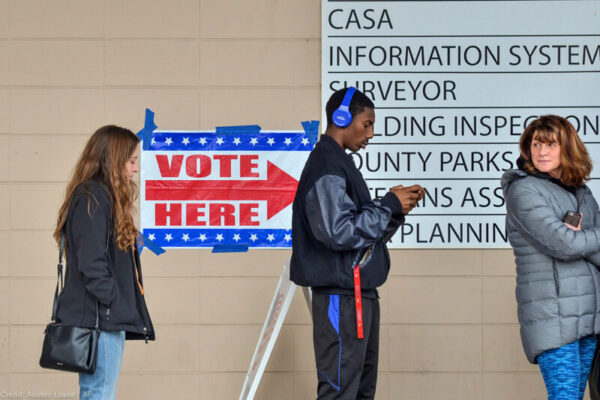
Fighting Cuts to Voting Access
Coalition for Open Democracy v. Scanlan
This lawsuit challenges HB 1569, a new law that will make New Hampshire the only state to require every person to produce documentary proof of citizenship when they register to vote for both state and federal elections. It also challenges HB 1569’s elimination a preexisting protection for voters—namely, an affidavit option that allowed voters who faced surprise challenges to their eligibility at the polls to swear to their qualifications and cast a ballot. Accordingly, HB 1569 violates the First and Fourteenth Amendments of the U.S. Constitution by placing substantial burdens on New Hampshirites at all stages of the voting process, and will arbitrarily disenfranchise hundreds, if not thousands of qualified voters.
Washington, D.C.
Oct 2025
Fighting Cuts to Voting Access
League of Women Voters Education Fund v. Trump
On March 25, 2025, in a sweeping and unprecedented Executive Order, President Trump attempted to usurp the power to regulate federal elections from Congress and the States. Among other things, the Executive Order directs the Election Assistance Commission—an agency that Congress specifically established to be bipartisan and independent—to require voters to show a passport or other citizenship documentation in order to register to vote in federal elections. If implemented, the Executive Order would threaten the ability of millions of eligible Americans to register and vote and upend the administration of federal elections.
On behalf of leading voter registration organizations and advocacy organizations, the ACLU and co-counsel filed a lawsuit to block the Executive Order as an unconstitutional power grab.
All Cases
53 Fighting Cuts to Voting Access Cases
California
Apr 2026
Fighting Cuts to Voting Access
United States v. Weber
Representing the League of Women Voters of California, the ACLU Voting Rights Project, ACLU of Northern California, and ACLU of Southern California have filed a motion to intervene in a federal lawsuit over the federal government’s demand that California turn over its entire voter registration rolls, including with voters’ sensitive personal data such as drivers’ license numbers and partial social security numbers.
Explore case
California
Apr 2026
Fighting Cuts to Voting Access
United States v. Weber
Representing the League of Women Voters of California, the ACLU Voting Rights Project, ACLU of Northern California, and ACLU of Southern California have filed a motion to intervene in a federal lawsuit over the federal government’s demand that California turn over its entire voter registration rolls, including with voters’ sensitive personal data such as drivers’ license numbers and partial social security numbers.
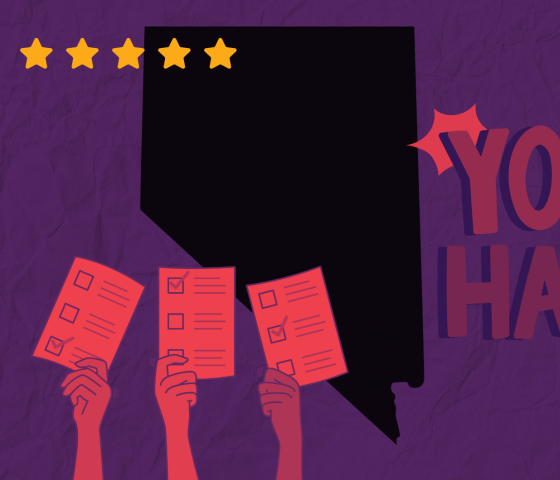
Nevada
Apr 2026
Fighting Cuts to Voting Access
United States v. Aguilar
The Department of Justice (“DOJ”) sued Nevada demanding the release of its full, unredacted voter file, which includes the highly sensitive and personal data of every voter in the state. This suit appears to be part of DOJ’s effort to build a national voter database without congressional authorization, improperly question the validity of state voter rolls, and intimidate eligible voters in Nevada and around the country.
Explore case
Nevada
Apr 2026
Fighting Cuts to Voting Access
United States v. Aguilar
The Department of Justice (“DOJ”) sued Nevada demanding the release of its full, unredacted voter file, which includes the highly sensitive and personal data of every voter in the state. This suit appears to be part of DOJ’s effort to build a national voter database without congressional authorization, improperly question the validity of state voter rolls, and intimidate eligible voters in Nevada and around the country.
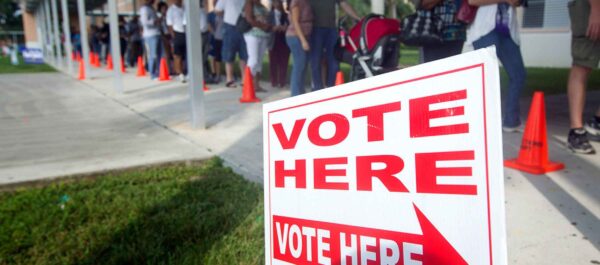
Florida
Apr 2026
Fighting Cuts to Voting Access
UnidosUS v. Byrd
Florida passed a new law conditioning a citizen’s ability to register to vote, to update their voter registration, and to remain on the voter registration rolls on the production of specified forms of documentary proof of citizenship (“DPOC”). Thousands of Florida citizens do not have ready access to these documents, especially some of the state’s most vulnerable voters.
Explore case
Florida
Apr 2026
Fighting Cuts to Voting Access
UnidosUS v. Byrd
Florida passed a new law conditioning a citizen’s ability to register to vote, to update their voter registration, and to remain on the voter registration rolls on the production of specified forms of documentary proof of citizenship (“DPOC”). Thousands of Florida citizens do not have ready access to these documents, especially some of the state’s most vulnerable voters.
Iowa
Mar 2026
Fighting Cuts to Voting Access
Selcuk v. Pate
Just two weeks out from the November 2024 presidential election, Iowa Secretary of State Paul Pate issued a directive to county clerks to challenge more than 2,000 voters at the polls on Election Day and force them to vote a provisional ballot that will count only if the voter can prove their citizenship.
The Secretary’s list of more than 2,000 voters does not adequately account for Iowans who have recently become U.S. citizens through naturalization, and thus risks disenfranchising scores of eligible voters based on national origin. The Secretary’s eleventh-hour gambit violates several provisions of the U.S. Constitution and federal law, and we have thus filed emergency suit to enjoin the directive.
Explore case
Iowa
Mar 2026
Fighting Cuts to Voting Access
Selcuk v. Pate
Just two weeks out from the November 2024 presidential election, Iowa Secretary of State Paul Pate issued a directive to county clerks to challenge more than 2,000 voters at the polls on Election Day and force them to vote a provisional ballot that will count only if the voter can prove their citizenship.
The Secretary’s list of more than 2,000 voters does not adequately account for Iowans who have recently become U.S. citizens through naturalization, and thus risks disenfranchising scores of eligible voters based on national origin. The Secretary’s eleventh-hour gambit violates several provisions of the U.S. Constitution and federal law, and we have thus filed emergency suit to enjoin the directive.
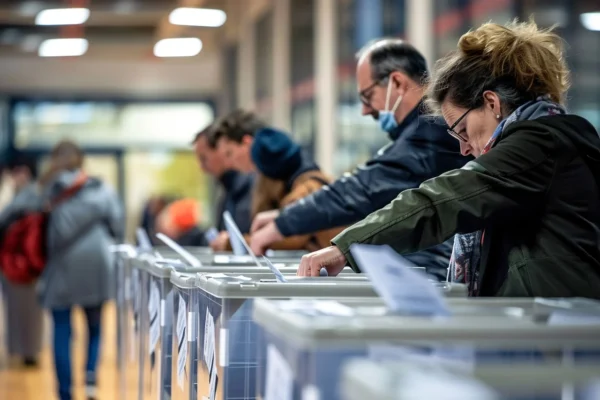
Georgia
Mar 2026
Fighting Cuts to Voting Access
United States v. Raffensperger
The Department of Justice sued Georgia, demanding the state produce its full, unredacted voter file, which contains highly sensitive and personal data on every voter in the state. This suit appears to be part of the DOJ's efforts to build a national voter database without congressional authorization, improperly question the validity of state voter rolls, and intimidate eligible voters in Georgia and across the country.
Explore case
Georgia
Mar 2026
Fighting Cuts to Voting Access
United States v. Raffensperger
The Department of Justice sued Georgia, demanding the state produce its full, unredacted voter file, which contains highly sensitive and personal data on every voter in the state. This suit appears to be part of the DOJ's efforts to build a national voter database without congressional authorization, improperly question the validity of state voter rolls, and intimidate eligible voters in Georgia and across the country.