South Carolina
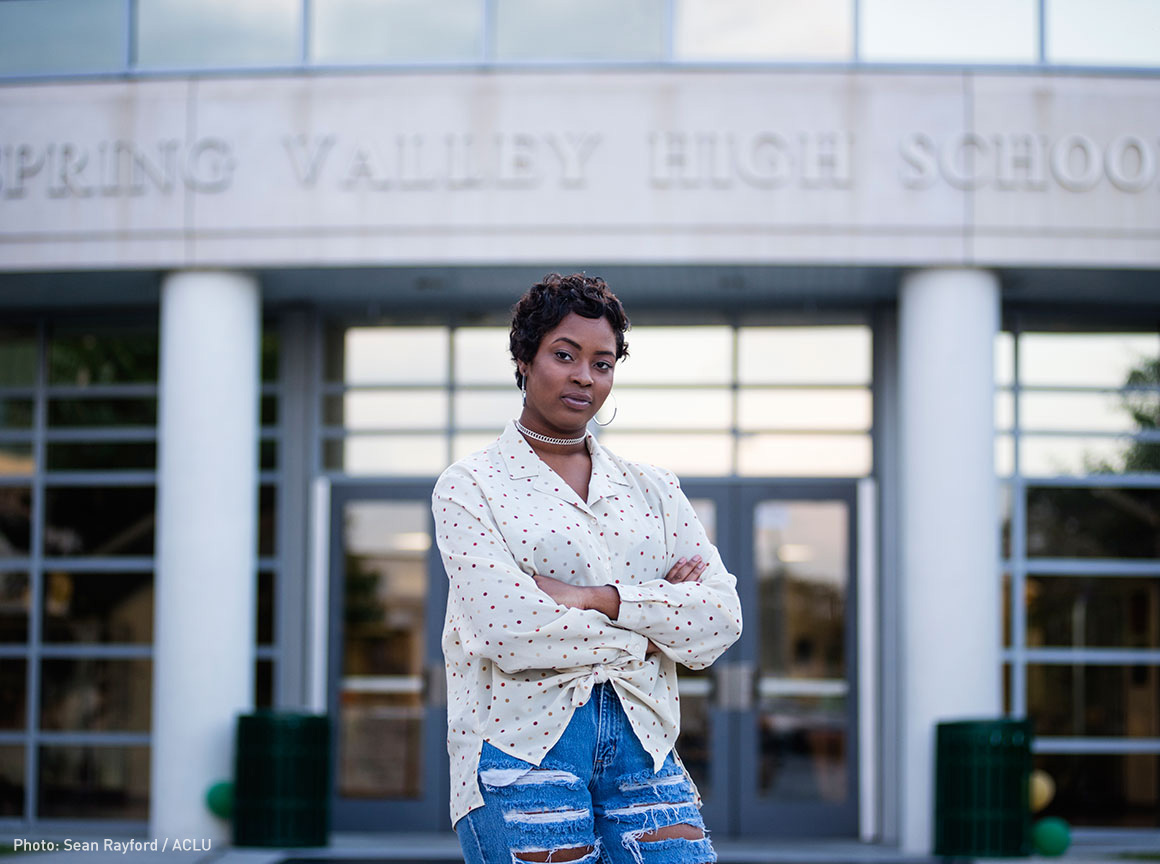
CYAP v. Wilson
The American Civil Liberties Union filed a federal lawsuit challenging South Carolina’s “disturbing schools” and “disorderly conduct” laws. The laws allowed students in school to be criminally charged for normal adolescent behaviors including loitering, cursing, or undefined “obnoxious” actions on school grounds and encouraged discriminatory enforcement against Black students and students with disabilities. The Fourth Circuit Court of Appeals affirmed the district court ruling that enforcing these laws against students was unconstitutional, affirming that subjecting students to criminal penalties under such vague rules interferes with their education and their future, and produces stark racial disparities. This decision should be instructive to the many school districts across the country where students continue to be charged with ‘disorderly conduct’ and similar vague crimes.
Status: Closed (Judgment)
View Case
All Cases
19 South Carolina Cases
South Carolina
May 2022
Voting Rights
South Carolina State Conference of the NAACP v. Alexander (State House Map Challenge)
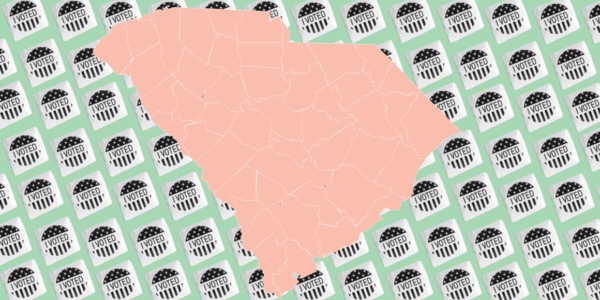
This case -- part of a broader challenge to South Carolina's redistricting after the 2020 Census -- involved a racial gerrymandering claim against the State's House district lines. Plaintiffs the South Carolina State Conference of the NAACP and an individual voter challenged the drawing of 29 specific districts as unconstitutional racial gerrymanders. In May 2022, the parties settled their dispute over State House maps, which resulted in redrawn districts in Dillon, Horry, Kershaw, Orangeburg, and Richland counties.
Explore case
South Carolina
May 2022
Voting Rights
South Carolina State Conference of the NAACP v. Alexander (State House Map Challenge)
This case -- part of a broader challenge to South Carolina's redistricting after the 2020 Census -- involved a racial gerrymandering claim against the State's House district lines. Plaintiffs the South Carolina State Conference of the NAACP and an individual voter challenged the drawing of 29 specific districts as unconstitutional racial gerrymanders. In May 2022, the parties settled their dispute over State House maps, which resulted in redrawn districts in Dillon, Horry, Kershaw, Orangeburg, and Richland counties.

South Carolina
Sep 2021
Racial Justice
White v. Shwedo
In the latest front in the nationwide fight against the criminalization of poverty, on October 31, 2019, the American Civil Liberties Union, ACLU of South Carolina, Terrell Marshall Law Group PLLC, Southern Poverty Law Center, and South Carolina Appleseed Legal Justice Center filed a federal lawsuit challenging South Carolina’s policy of automatically suspending the driver’s licenses of people with unpaid traffic tickets. The South Carolina Department of Motor Vehicles does not ensure that people who cannot pay will not lose their licenses in violation of the Fourteenth Amendment’s promise of due process and equal protection under the law. South Carolina’s wealth-based license suspensions impact more than 190,000 people, funneling those who are unable to pay, particularly poor people of color, deep into cycles of poverty, job loss, traffic violations, and entanglement with the legal system.
Explore case
South Carolina
Sep 2021
Racial Justice
White v. Shwedo
In the latest front in the nationwide fight against the criminalization of poverty, on October 31, 2019, the American Civil Liberties Union, ACLU of South Carolina, Terrell Marshall Law Group PLLC, Southern Poverty Law Center, and South Carolina Appleseed Legal Justice Center filed a federal lawsuit challenging South Carolina’s policy of automatically suspending the driver’s licenses of people with unpaid traffic tickets. The South Carolina Department of Motor Vehicles does not ensure that people who cannot pay will not lose their licenses in violation of the Fourteenth Amendment’s promise of due process and equal protection under the law. South Carolina’s wealth-based license suspensions impact more than 190,000 people, funneling those who are unable to pay, particularly poor people of color, deep into cycles of poverty, job loss, traffic violations, and entanglement with the legal system.
South Carolina
Sep 2020
Voting Rights
Thomas v. Andino
The American Civil Liberties Union, ACLU of South Carolina, and NAACP Legal Defense and Educational Fund filed a federal lawsuit on April 22, 2020, over South Carolina’s failure to take action to ensure all eligible voters can vote by mail during the COVID-19 pandemic — even for its fast-approaching June 9 statewide primary elections.
Explore case
South Carolina
Sep 2020
Voting Rights
Thomas v. Andino
The American Civil Liberties Union, ACLU of South Carolina, and NAACP Legal Defense and Educational Fund filed a federal lawsuit on April 22, 2020, over South Carolina’s failure to take action to ensure all eligible voters can vote by mail during the COVID-19 pandemic — even for its fast-approaching June 9 statewide primary elections.
South Carolina
Oct 2019
Criminal Law Reform
Smart Justice
Bairefoot v. City of Beaufort et al
In South Carolina’s municipal courts today, defendants are prosecuted, convicted, and jailed without ever having a lawyer appointed to their case or even being advised of their right to counsel. Hundreds of these defendants who were deprived of counsel—including Tina Bairefoot, Dae’Quandrea Nelson, and Nathan Fox—have been and are incarcerated in local jails and state prisons every year. Cities and towns can decide whether they have municipal courts—they are optional—but if they decide to have them they must follow the Constitution, which includes the right to counsel.
Explore case
South Carolina
Oct 2019
Criminal Law Reform
Smart Justice
Bairefoot v. City of Beaufort et al
In South Carolina’s municipal courts today, defendants are prosecuted, convicted, and jailed without ever having a lawyer appointed to their case or even being advised of their right to counsel. Hundreds of these defendants who were deprived of counsel—including Tina Bairefoot, Dae’Quandrea Nelson, and Nathan Fox—have been and are incarcerated in local jails and state prisons every year. Cities and towns can decide whether they have municipal courts—they are optional—but if they decide to have them they must follow the Constitution, which includes the right to counsel.