Georgia
Featured
Georgia
Jun 2020

Disability Rights
Harris v. Georgia Department of Corrections
On October 3, 2018, the ACLU and the ACLU of Georgia, together with National Association of the Deaf and Weil, Gotshal & Manges, LLP, filed a federal lawsuit on behalf of deaf and hard of hearing people incarcerated in prisons supervised by the Georgia Department of Corrections (GDC). The complaint highlights GDC’s failure to provide incarcerated deaf and hard of hearing people with equally effective communication access to programs, services, and activities, including medical care, telecommunications, and prison programs. Further, due to lack of access to interpreters and other communication accommodations, deaf prisoners are also often unable to explain or defend themselves when GDC takes disciplinary action against them.
All Cases
31 Georgia Cases
Georgia
Nov 2024
Voting Rights
Ayota v. Fall
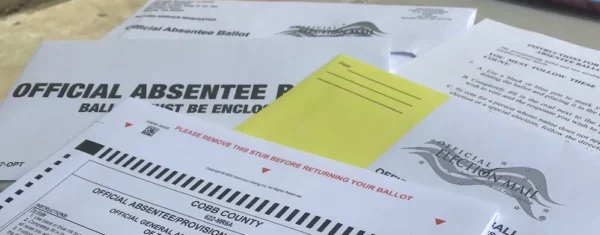
On October 31, 2024, just five days before the November 5 General Election, Cobb County announced that it had failed to send more than 3,000 absentee ballots to Cobb County voters who had timely requested them. Many of these voters are at school hundreds of miles away or have disabilities that make it all but impossible to vote in person. The ACLU and co-counsel sued on behalf of affected voters to ensure that they would not be disenfranchised because of the County's administrative error.
Explore case
Georgia
Nov 2024
Voting Rights
Ayota v. Fall
On October 31, 2024, just five days before the November 5 General Election, Cobb County announced that it had failed to send more than 3,000 absentee ballots to Cobb County voters who had timely requested them. Many of these voters are at school hundreds of miles away or have disabilities that make it all but impossible to vote in person. The ACLU and co-counsel sued on behalf of affected voters to ensure that they would not be disenfranchised because of the County's administrative error.
Georgia
Oct 2024
Voting Rights
Heimel v. Gregg
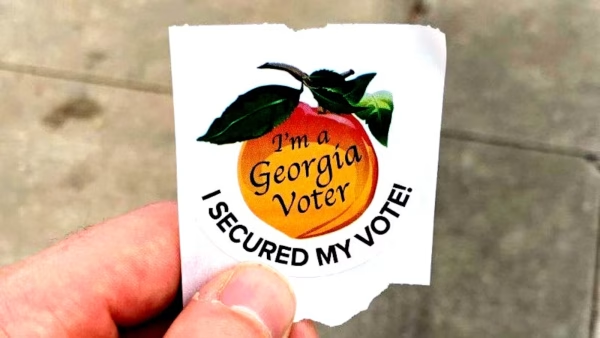
The ACLU and partners intervened in a lawsuit that sought to illegally disenfranchise hundreds of Oconee County voters on the eve of the November 5 election. The Oconee lawsuit is just one in a wave of similar attempts by election vigilantes across the state to indiscriminately purge voters from the voter rolls in violation of the law.
Explore case
Georgia
Oct 2024
Voting Rights
Heimel v. Gregg
The ACLU and partners intervened in a lawsuit that sought to illegally disenfranchise hundreds of Oconee County voters on the eve of the November 5 election. The Oconee lawsuit is just one in a wave of similar attempts by election vigilantes across the state to indiscriminately purge voters from the voter rolls in violation of the law.
Georgia
Oct 2024
Voting Rights
Quinn v. Raffensperger
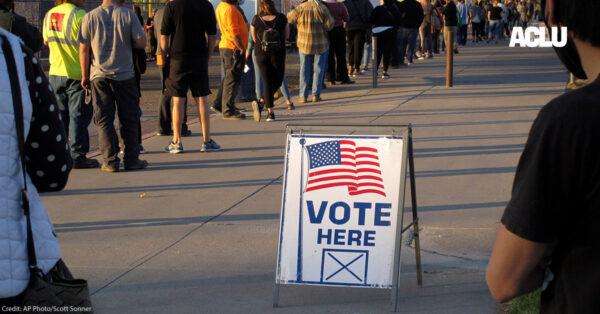
The ACLU, along with several partner organizations, have sought to intervene in this case to represent the rights of voters and voting-rights organizations in a case that asks a federal court to compel the state to conduct list maintenance and move voters to the inactive list on the eve of a presidential election. The relief that the private plaintiffs seek is presumptively unlawful because this list maintenance activity would happen within 90 days of a federal election, in violation of the National Voter Registration Act (“NVRA”).
Explore case
Georgia
Oct 2024
Voting Rights
Quinn v. Raffensperger
The ACLU, along with several partner organizations, have sought to intervene in this case to represent the rights of voters and voting-rights organizations in a case that asks a federal court to compel the state to conduct list maintenance and move voters to the inactive list on the eve of a presidential election. The relief that the private plaintiffs seek is presumptively unlawful because this list maintenance activity would happen within 90 days of a federal election, in violation of the National Voter Registration Act (“NVRA”).

Georgia
Sep 2024
Voting Rights
Frazier v. Fulton County Department of Registration and Elections
The ACLU, along with several partner organizations, have intervened in this case to represent the rights of voters and voting-rights organizations in a case that asks a federal court to compel the purge of nearly 2,000 Fulton County, Georgia voters from the state’s rolls on the eve of a presidential election. The relief that the private plaintiffs seek is presumptively unlawful because this purge would happen within 90 days of a federal election, in violation of the National Voter Registration Act (“NVRA”).
Explore case
Georgia
Sep 2024
Voting Rights
Frazier v. Fulton County Department of Registration and Elections
The ACLU, along with several partner organizations, have intervened in this case to represent the rights of voters and voting-rights organizations in a case that asks a federal court to compel the purge of nearly 2,000 Fulton County, Georgia voters from the state’s rolls on the eve of a presidential election. The relief that the private plaintiffs seek is presumptively unlawful because this purge would happen within 90 days of a federal election, in violation of the National Voter Registration Act (“NVRA”).
Georgia
Sep 2024
Voting Rights
Abhiraman v. State Election Board (Amicus)
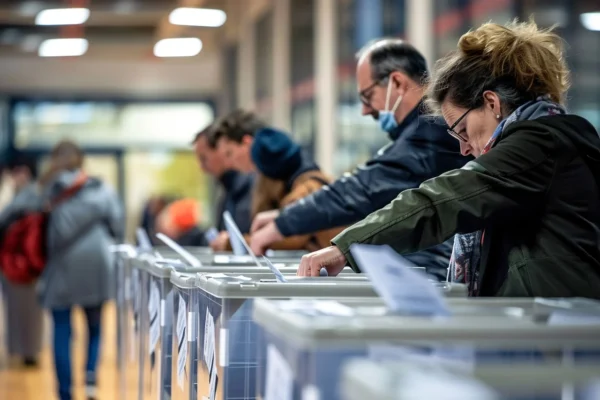
The Georgia’s State Election Board recently passed two new rules about local election certification that threaten to disenfranchise thousands of Georgia voters. The rule changes are part of a nationwide effort by 2020 election-deniers to obtain positions on county election boards and weaponize certification for partisan ends at the expense of voters.
Explore case
Georgia
Sep 2024
Voting Rights
Abhiraman v. State Election Board (Amicus)
The Georgia’s State Election Board recently passed two new rules about local election certification that threaten to disenfranchise thousands of Georgia voters. The rule changes are part of a nationwide effort by 2020 election-deniers to obtain positions on county election boards and weaponize certification for partisan ends at the expense of voters.