Voting Rights
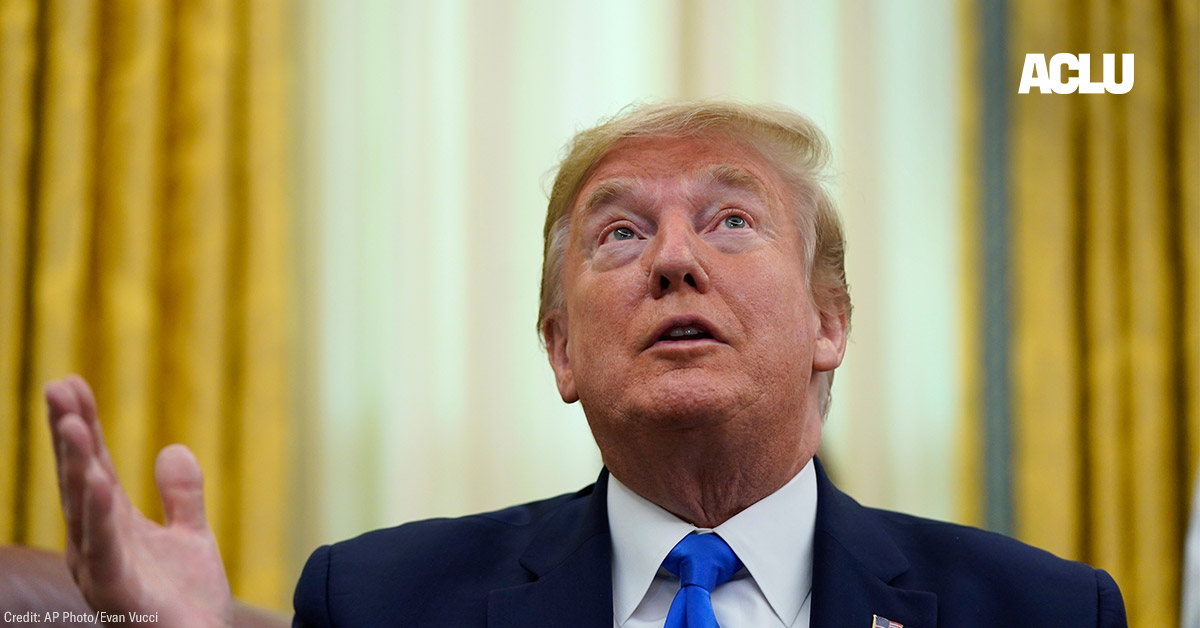
League of Women Voters of Massachusetts v. Trump
On March 31, 2026, President Trump issued a sweeping Executive Order titled "Ensuring Citizen Verification and Integrity in Federal Elections," seeking once again to seize control of election administration from Congress and the states. The Order directs federal agencies to compile lists of U.S. citizens and transmit them to states before every election, directs the U.S. Postal Service -- an independent agency established by Congress -- to create a list of "approved" mail voters, and instructs USPS to refuse to deliver ballots from voters not on that federally created list. If implemented, the Order would threaten the ability of millions of eligible citizens to cast their ballots, particularly military members, overseas citizens, the elderly, recently naturalized citizens, and voters with disabilities who rely on mail voting.
Status: Ongoing
View Case
Learn About Voting Rights
Featured
New Hampshire
Jul 2026
Voting Rights
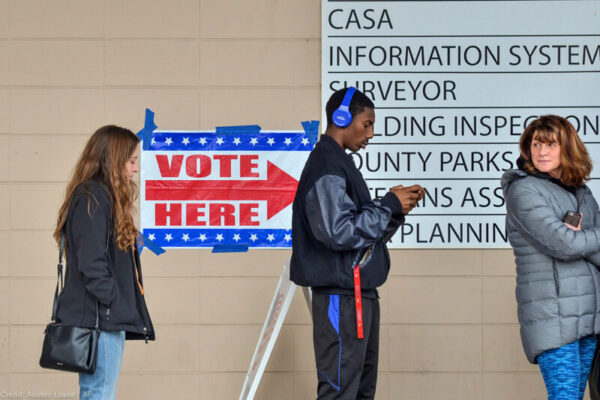
Coalition for Open Democracy v. Scanlan
This lawsuit challenges HB 1569, a new law that will make New Hampshire the only state to require every person to produce documentary proof of citizenship when they register to vote for both state and federal elections. It also challenges HB 1569’s elimination a preexisting protection for voters—namely, an affidavit option that allowed voters who faced surprise challenges to their eligibility at the polls to swear to their qualifications and cast a ballot. Accordingly, HB 1569 violates the First and Fourteenth Amendments of the U.S. Constitution by placing substantial burdens on New Hampshirites at all stages of the voting process, and will arbitrarily disenfranchise hundreds, if not thousands of qualified voters.
U.S. Supreme Court
May 2026
Voting Rights
Racial Justice
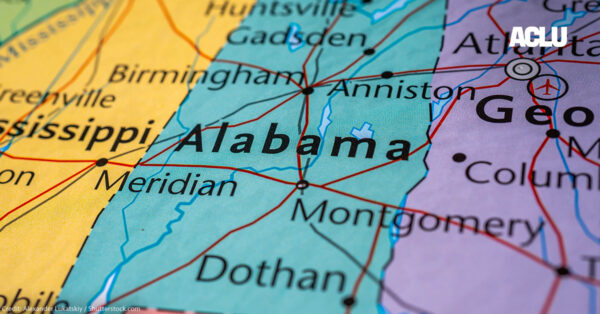
Allen v. Milligan
Whether Alabama’s congressional districts violate Section 2 of the Voting Rights Act because they discriminate against Black voters. We succeeded in winning a new map for 2024 elections which, for the first time, has two congressional district that provide Black voters a fair opportunity to elect candidates of their choosing despite multiple attempts by Alabama to stop us at the Supreme Court. Despite this win, Alabama is still defending its discriminatory map, and a trial was held in February 2025 to determine the map for the rest of the decade.
In May 2025, a federal court ruled that Alabama's 2023 congressional map both violates Section 2 of the Voting Rights Act and was enacted by the Alabama Legislature with racially discriminatory intent.
U.S. Supreme Court
Apr 2026

Voting Rights
Louisiana v. Callais (Callais v. Landry)
Whether the congressional map Louisiana adopted to cure a Voting Rights Act violation in Robinson v. Ardoin is itself unlawful as a gerrymander.
Mississippi
Dec 2025
Voting Rights
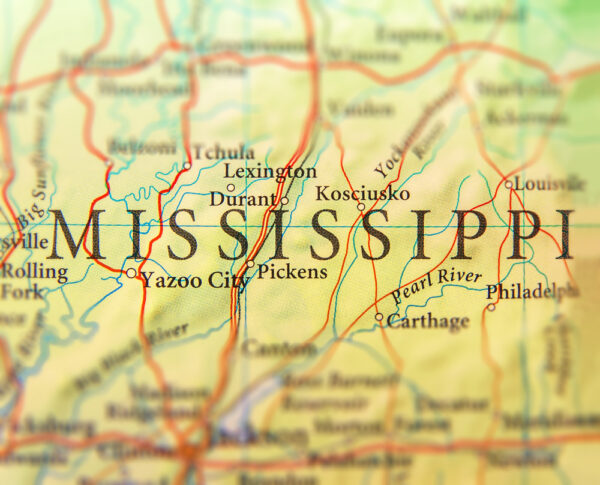
White v. Mississippi State Board of Elections
District lines used to elect Mississippi’s Supreme Court have gone unchanged for more than 35 years. We’re suing because the current lines crack the Mississippi Delta and dilute the voting strength of Black Mississippians in state Supreme Court elections, in violation of the Voting Rights Act.
Washington, D.C.
Oct 2025
Voting Rights
League of Women Voters Education Fund v. Trump
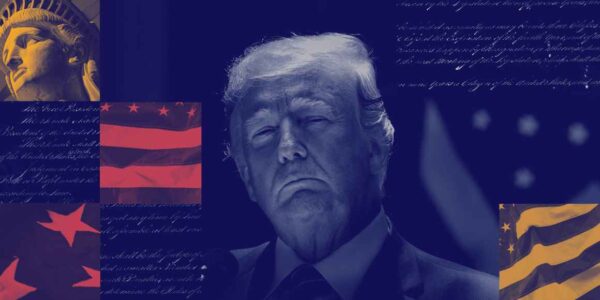
On March 25, 2025, in a sweeping and unprecedented Executive Order, President Trump attempted to usurp the power to regulate federal elections from Congress and the States. Among other things, the Executive Order directs the Election Assistance Commission—an agency that Congress specifically established to be bipartisan and independent—to require voters to show a passport or other citizenship documentation in order to register to vote in federal elections. If implemented, the Executive Order would threaten the ability of millions of eligible Americans to register and vote and upend the administration of federal elections.
On behalf of leading voter registration organizations and advocacy organizations, the ACLU and co-counsel filed a lawsuit to block the Executive Order as an unconstitutional power grab.
U.S. Supreme Court
Oct 2025
Voting Rights
State Board of Election Commissioners v. Mississippi State Conference of the NAACP
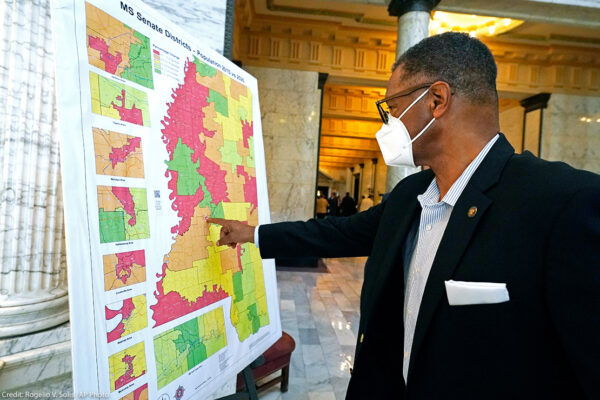
Mississippi has a growing Black population, which is already the largest Black population percentage of any state in the country. Yet. Black Mississippians continue to be significantly under-represented in the state legislature, as Mississippi’s latest districting maps fail to reflect the reality of the state’s changing demographics. During the 2022 redistricting process, the Mississippi legislature refused to create any new districts where Black voters have a chance to elect their preferred representative. The current district lines therefore dilute the voting power of Black Mississippians and continue to deprive them of political representation that is responsive to their needs and concerns, including severe disparities in education and healthcare.
All Cases
206 Voting Rights Cases
West Virginia
Jul 2026
Voting Rights
United States v. Warner
The United States has sued West Virginia, seeking access to the State's complete voter registration file, including fields that are not publicly available. The West Virginia Citizen Action Group (CAG), a non profit organization representing voters across the State, has moved to intervene. Represented by the ACLU, ACLU of West Virginia, the Campaign Legal Center, and the Brennan Center for Justice, CAG argues that its members' personal data and ability to participate in elections are directly at risk.
Explore case
West Virginia
Jul 2026
Voting Rights
United States v. Warner
The United States has sued West Virginia, seeking access to the State's complete voter registration file, including fields that are not publicly available. The West Virginia Citizen Action Group (CAG), a non profit organization representing voters across the State, has moved to intervene. Represented by the ACLU, ACLU of West Virginia, the Campaign Legal Center, and the Brennan Center for Justice, CAG argues that its members' personal data and ability to participate in elections are directly at risk.
California
Jul 2026
Voting Rights
Issa v. Weber
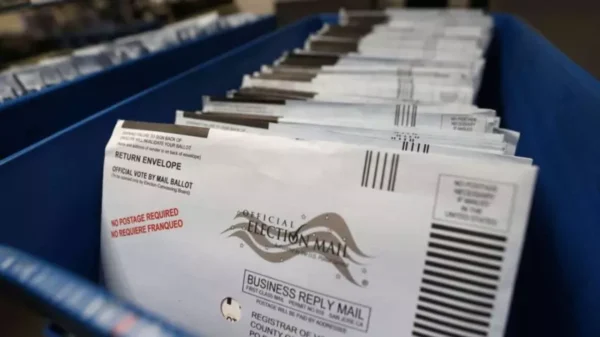
Congressman Darrell Issa sued to prevent California from counting mail ballots postmarked by election day and received within the following seven days, consistent with California law. If successful, literally hundreds of thousands of Californians will be disenfranchised at each election. The ACLU and its three California affiliates have sought to intervene in the case on behalf of the League of Women Voters of California to ensure that California voters are able to have their ballots counted consistent with state procedures.
Explore case
California
Jul 2026
Voting Rights
Issa v. Weber
Congressman Darrell Issa sued to prevent California from counting mail ballots postmarked by election day and received within the following seven days, consistent with California law. If successful, literally hundreds of thousands of Californians will be disenfranchised at each election. The ACLU and its three California affiliates have sought to intervene in the case on behalf of the League of Women Voters of California to ensure that California voters are able to have their ballots counted consistent with state procedures.
Wisconsin
Jul 2026
Voting Rights
United States v. Wisconsin Elections Commission
The Department of Justice sued the Wisconsin Elections Commission and its members, demanding the state produce its full, unredacted voter file, which contains highly sensitive and personal data on every voter in the state. This suit appears to be part of the federal government's efforts to build a national voter database without congressional authorization and to improperly question the validity of state voter rolls.
Explore case
Wisconsin
Jul 2026
Voting Rights
United States v. Wisconsin Elections Commission
The Department of Justice sued the Wisconsin Elections Commission and its members, demanding the state produce its full, unredacted voter file, which contains highly sensitive and personal data on every voter in the state. This suit appears to be part of the federal government's efforts to build a national voter database without congressional authorization and to improperly question the validity of state voter rolls.
U.S. Supreme Court
Jun 2026
Voting Rights
Watson v. Republican National Committee (Amicus)
In 2020, in a nearly unanimous bipartisan vote, Mississippi joined eighteen other states in accepting mail ballots postmarked by Election Day that arrived after Election Day (in Mississippi’s case, up to five business days). This lawsuit by partisan actors seeks to disenfranchise these voters whose ballot is mailed by Election Day but—through no fault of their own—does not arrive until afterwards. In Mississippi, this harm will fall disproportionately on voters with disabilities, older voters, and other communities that rely upon absentee voting. Twisting the words and meaning of Congress, the RNC argues that three longstanding federal laws that set a uniform election day for federal races require that ballot may only be counted if they are received by election officials by Election Day. If accepted, this radical argument would not only disenfranchise thousands upon thousands of voters in Mississippi and thirty other states, but also upend election administration in every state.
Explore case
U.S. Supreme Court
Jun 2026
Voting Rights
Watson v. Republican National Committee (Amicus)
In 2020, in a nearly unanimous bipartisan vote, Mississippi joined eighteen other states in accepting mail ballots postmarked by Election Day that arrived after Election Day (in Mississippi’s case, up to five business days). This lawsuit by partisan actors seeks to disenfranchise these voters whose ballot is mailed by Election Day but—through no fault of their own—does not arrive until afterwards. In Mississippi, this harm will fall disproportionately on voters with disabilities, older voters, and other communities that rely upon absentee voting. Twisting the words and meaning of Congress, the RNC argues that three longstanding federal laws that set a uniform election day for federal races require that ballot may only be counted if they are received by election officials by Election Day. If accepted, this radical argument would not only disenfranchise thousands upon thousands of voters in Mississippi and thirty other states, but also upend election administration in every state.

New Hampshire
Jun 2026
Voting Rights
United States v. Scanlan (Amicus)
Representing the ACLU of New Hampshire and League of Women Voters of New Hampshire, the ACLU Voting Rights Project, ACLU of New Hampshire, Campaign Legal Center, and Brennan Center filed an amicus brief in a federal lawsuit over the federal government’s demand that Oregon turn over its entire voter registration rolls, including with voters’ sensitive personal data such as drivers’ license numbers and partial social security numbers.
Explore case
New Hampshire
Jun 2026
Voting Rights
United States v. Scanlan (Amicus)
Representing the ACLU of New Hampshire and League of Women Voters of New Hampshire, the ACLU Voting Rights Project, ACLU of New Hampshire, Campaign Legal Center, and Brennan Center filed an amicus brief in a federal lawsuit over the federal government’s demand that Oregon turn over its entire voter registration rolls, including with voters’ sensitive personal data such as drivers’ license numbers and partial social security numbers.