Privacy and Surveillance
FBI v. Fikre
Whether the government can overcome the voluntary cessation exception to mootness by removing an individual from the No Fly List when the government has not repudiated its decision to place him on the List and remains free to return him to the List for the same reasons and using the same procedures he alleges were unlawful.
Status: Ongoing
View Case
Learn About Privacy and Surveillance
Featured
U.S. Supreme Court
Apr 2022
Privacy and Surveillance
+2 Issues
FBI v. Fazaga
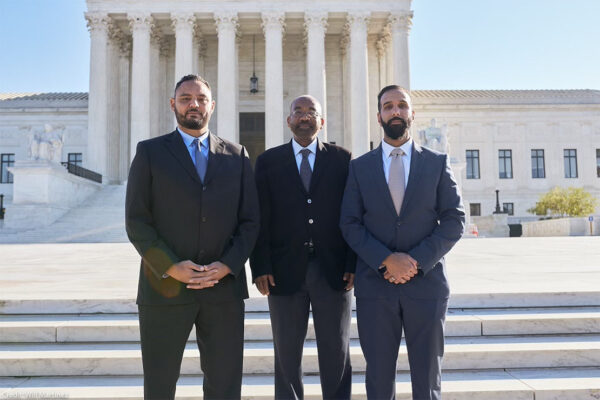
In a case scheduled to be argued before the U.S. Supreme Court on November 8, 2021, three Muslim Americans are challenging the FBI’s secret spying on them and their communities based on their religion, in violation of the Constitution and federal law. In what will likely be a landmark case, the plaintiffs — Yassir Fazaga, Ali Uddin Malik, and Yasser Abdelrahim — insist that the FBI cannot escape accountability for violating their religious freedom by invoking “state secrets.” The plaintiffs are represented by the Center for Immigration Law and Policy at UCLA School of Law, the ACLU of Southern California, the American Civil Liberties Union, the Council for American Islamic Relations, and the law firm of Hadsell Stormer Renick & Dai.
All Cases
36 Privacy and Surveillance Cases

Kansas
Sep 2023
Privacy and Surveillance
National Security
United States v. Hay
This case concerns whether long-term, continuous use of a surveillance camera targeted at a person’s home is a Fourth Amendment search.
Explore case
Kansas
Sep 2023
Privacy and Surveillance
National Security
United States v. Hay
This case concerns whether long-term, continuous use of a surveillance camera targeted at a person’s home is a Fourth Amendment search.
Court Case
Sep 2023
Privacy and Surveillance
ACLU v. ODNI – FOIA Lawsuit Seeking Records About Government Surveillance Under the USA Freedom Act
Explore case
Court Case
Sep 2023
Privacy and Surveillance
ACLU v. ODNI – FOIA Lawsuit Seeking Records About Government Surveillance Under the USA Freedom Act
Michigan Supreme Court
Sep 2023
Privacy and Surveillance
Privacy & Technology
Long Lake Township v. Maxon
On September 8, 2023, the ACLU, the ACLU of Michigan, and the Mackinac Center for Public Policy filed an amicus brief in the Michigan Supreme Court arguing that the local government deploying an unmanned drone to take aerial photographs of the appellant’s property violated the Fourth Amendment.
Explore case
Michigan Supreme Court
Sep 2023
Privacy and Surveillance
Privacy & Technology
Long Lake Township v. Maxon
On September 8, 2023, the ACLU, the ACLU of Michigan, and the Mackinac Center for Public Policy filed an amicus brief in the Michigan Supreme Court arguing that the local government deploying an unmanned drone to take aerial photographs of the appellant’s property violated the Fourth Amendment.

Court Case
May 2023
Privacy and Surveillance
Xi v. United States – Challenge to Warrantless Surveillance
The ACLU represents Xiaoxing Xi, a Chinese-American physics professor at Temple University, who is suing the government over its dismissed prosecution of him for supposedly sharing sensitive technology with scientists in China. The lawsuit, filed in 2017, challenges the FBI’s baseless arrest of Xi and it surveillance methods as well as its discriminatory targeting of Chinese-American scientists.
Explore case
Court Case
May 2023
Privacy and Surveillance
Xi v. United States – Challenge to Warrantless Surveillance
The ACLU represents Xiaoxing Xi, a Chinese-American physics professor at Temple University, who is suing the government over its dismissed prosecution of him for supposedly sharing sensitive technology with scientists in China. The lawsuit, filed in 2017, challenges the FBI’s baseless arrest of Xi and it surveillance methods as well as its discriminatory targeting of Chinese-American scientists.
Court Case
May 2023
Privacy and Surveillance
National Security
The Warrant Clause in the Digital Age
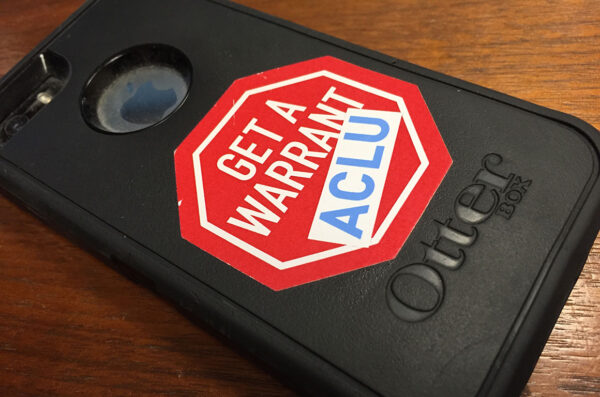
The information generated by today’s digital devices and online services reveals private matters far beyond what one could learn from physical analogs. In a series of legal filings and a white paper, available below, the ACLU has argued that to keep apace with technological developments and adequately protect our privacy, the Fourth Amendment's warrant requirement must be interpreted robustly. Seizures and searches of digital data must be cabined to probable cause, limited to specific categories of information relevant to the investigation, and closely overseen by a neutral magistrate.
Explore case
Court Case
May 2023
Privacy and Surveillance
National Security
The Warrant Clause in the Digital Age
The information generated by today’s digital devices and online services reveals private matters far beyond what one could learn from physical analogs. In a series of legal filings and a white paper, available below, the ACLU has argued that to keep apace with technological developments and adequately protect our privacy, the Fourth Amendment's warrant requirement must be interpreted robustly. Seizures and searches of digital data must be cabined to probable cause, limited to specific categories of information relevant to the investigation, and closely overseen by a neutral magistrate.